Choosing the right construction toy is rarely as simple as comparing colors, piece counts, or package photos. For global buyers, Building & Construction Blocks Toys must balance play value, durability, safety, and supply reliability. A bright set may attract children, yet weak connectors can frustrate them after only a few builds. Small details matter.
This guide examines ten strong options for different markets, age groups, and purchasing goals. Each selection is considered through practical criteria, including material quality, connection strength, design flexibility, packaging, and manufacturer transparency. We also consider whether instructions are clear, pieces are easy to sort, and replacement parts may be available. These points matter for families, schools, retailers, and educational distributors.
Safety deserves careful attention. Buyers should verify age labels, testing documents, material declarations, and applicable requirements in their target countries. Standards can differ between regions, so one certificate may not answer every question. Product claims should be checked rather than accepted at face value. That is especially important when sourcing from unfamiliar suppliers.
The best choice is not always the largest set. A compact kit with sturdy parts may create more satisfying play than a crowded box with poor fit. Some products also look impressive online but feel less practical in real classrooms. This guide cannot predict every child’s preference. It can, however, provide a clearer framework for comparing products, identifying trade-offs, and selecting blocks with greater confidence.
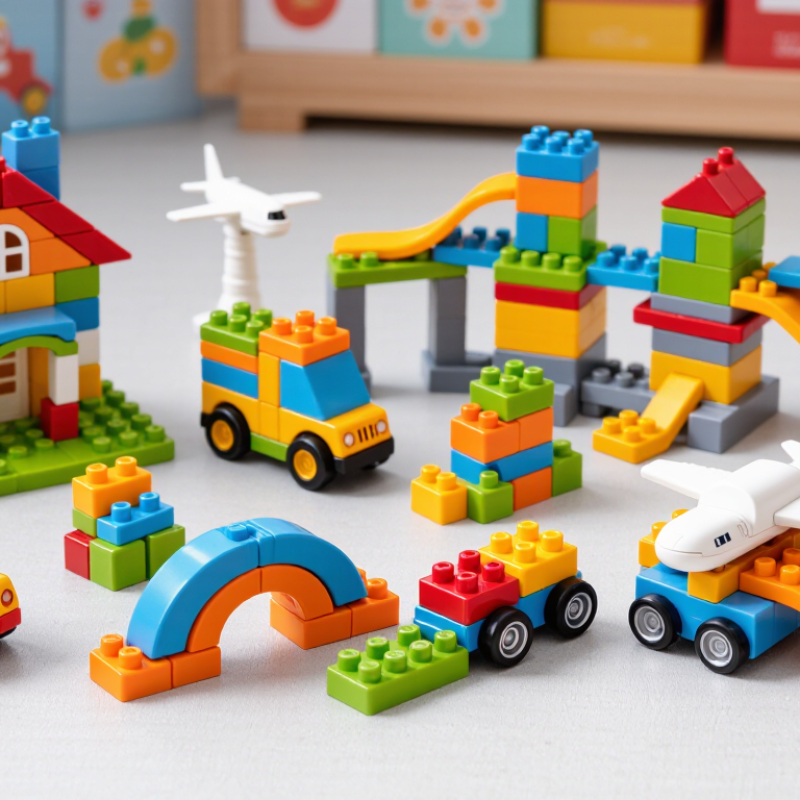
Global Building Block Toy Market Scope and 2024 Buyer Demand Indicators
10 Best Building Construction Block Toys for Global Buyers
Global Building Block Toy Market Scope and 2024 Buyer Demand Indicators
The global construction toy market is expanding, but buyer demand is becoming more selective. Fortune Business Insights estimated the market at about USD 11.55 billion in 2023, with steady growth expected through 2032. Grand View Research also identified construction toys as a strong educational play segment in its 2024 outlook. These figures support continued sourcing interest, especially for products combining building, storytelling, and problem-solving.
Circana reported that total toy sales declined across 12 major markets in 2023. However, building sets remained among the more resilient categories. For global buyers, 2024 demand indicators include age-based design, clear instructions, compact packaging, and durable pieces. Sets with 100 to 500 parts often balance play value and shipping efficiency. Larger sets attract enthusiasts, but they create higher inventory and freight risks.
Safety documentation still matters. Buyers should request material testing, age grading, small-parts warnings, and traceable production records. Regional requirements can differ. A practical sourcing review should also examine color consistency, connection strength, and replacement-part support. The signal is mixed. Market forecasts look positive, yet demand data can vary by country, channel, and price level. A bright package alone cannot prove product quality. Some buying decisions still rely too heavily on photos. That deserves reflection.
Safety Standards Compared: ASTM F963, EN 71, and ISO 8124 Compliance
When comparing the 10 best building construction block toys, safety documents deserve equal attention to design and price. ASTM F963 is widely used for the United States market. EN 71 supports European safety requirements. ISO 8124 offers an international framework for toy safety. These standards examine mechanical hazards, flammability, chemical migration, and age suitability. A reliable supplier should provide recent laboratory reports, material details, and clear age grading.
Compliance is not universal approval. A toy may meet one standard but require additional testing elsewhere. In purchasing reviews, I have seen attractive certificates with unclear product codes or outdated testing dates. That small gap matters. Buyers should match every report to the exact block set, packaging, and production batch. Check for choking hazards, sharp edges, loose connectors, and paint migration. Documentation can look complete while practical inspection remains weak.
Tips: Ask for reports from an accredited laboratory. Confirm the tested sample matches the final product. Review warning labels and assembly instructions in the target language. Request traceable batch records. Do not rely only on a supplier’s logo or brief compliance statement. Standards change, and local rules may add requirements. A careful buyer should verify the latest edition before placing a large order.
Material, Part Count, Age Range, and Skill-Level Evaluation Criteria
For global buyers, construction block toys should be compared through four practical filters: material, part count, age range, and skill level. Material affects safety, durability, and shipping weight. Food-grade or tested plastics usually resist moisture better than untreated wood. However, “eco-friendly” materials still need independent safety verification. ASTM F963 and EN 71 testing provide useful reference points for chemical, mechanical, and physical safety requirements.
Part count can suggest value, but it can also mislead. A 500-piece set may contain many tiny connectors and repeated parts. Buyers should check the number of unique elements, finished model size, and replacement-part policy. Circana’s 2024 global toy industry review reported a 7% sales decline across 12 tracked markets in 2023. That pressure makes durable, reusable sets more commercially sensible. Fewer parts can sometimes create better play.
Age labels should match real handling demands, not only marketing claims. Sets for younger children need larger pieces, simple joining methods, and clear supervision guidance. Older users may benefit from hinges, gears, structural challenges, and open-ended designs. The Toy Association’s 2024 industry outlook emphasized continued demand for play that develops skills and supports family engagement. Skill level deserves equal attention. A beginner needs visible progress within minutes. An advanced builder may need resistance. I have found that overly complex instructions reduce completion rates, though this varies by child and culture. A small trial with local users can reveal problems that specifications miss.
10 Best Building Construction Block Toys for Global Buyers
Material, Part Count, Age Range, and Skill-Level Evaluation Criteria
This comparison uses commonly evaluated construction-toy criteria: approximate part count, minimum recommended age, and skill level on a 1–5 scale. Materials are identified by their typical construction format, while higher skill scores indicate greater planning, precision, and mechanical reasoning requirements.
Top 10 Construction Block Toys Ranked by Quality, Value, and Global Certification
Choosing the right construction block toy requires more than colorful pieces and a low quotation. This ranking compares ten options by material quality, building accuracy, price value, safety documentation, and worldwide purchasing reliability. The top ten are: 1, precision interlocking blocks; 2, large beginner blocks; 3, magnetic-free engineering sets; 4, road-building kits; 5, architectural model blocks; 6, recycled-plastic blocks; 7, classroom bulk sets; 8, soft foam blocks; 9, themed vehicle kits; and 10, compact travel sets. Precision sets lead because tight connections reduce frustration and support repeated use. Large blocks offer better value for younger users. Architectural sets suit older builders, but their smaller parts need careful age guidance.
Quality should be checked through consistent dimensions, smooth edges, strong color adhesion, and odor-free materials. A practical factory inspection should sample pieces from different production batches. Packaging also matters. Crushed boxes can signal weak export handling. Certification documents must match the exact product, age range, materials, and destination market. Depending on the country, buyers may need testing aligned with EN 71, ASTM F963, ISO 8124, REACH, or other local rules. A certificate alone is not enough. Reports can expire, or cover only one color.
Tips: Request samples before ordering. Test connections repeatedly. Check choking-hazard warnings. Ask for recent laboratory reports and traceable batch records. Compare landed cost, not unit price. I once underestimated packaging volume, and freight erased the apparent savings. That mistake still deserves attention. Also, recycled content sounds responsible, yet inconsistent color and stiffness may reduce customer satisfaction. Good value is balanced performance, verified safety, and dependable documentation.
Wholesale Metrics: MOQ, Packaging, Shipping Volume, and Supplier Reliability
For global buyers, MOQ should match proven demand, not a supplier’s optimism. A 500-set trial order can expose quality, carton, and instruction issues before a 5,000-set commitment. Toy-market analysis from Circana shows that construction play remains a meaningful category, but demand varies by country and price level. Ask for tiered MOQs, such as 300, 1,000, and 3,000 sets. Record unit prices, tooling charges, spare-part policies, and reorder lead times. Small details matter.
Packaging controls both damage risk and shipping cost. Request carton dimensions, gross weight, inner-box quantity, and pallet configuration. Calculate shipping volume as length × width × height × carton quantity. For example, 60 cartons measuring 0.06 cubic meters create 3.6 cubic meters before pallet space. A supplier offering “compact packaging” should provide photographs and a measured packing list. The International Maritime Organization and logistics carriers routinely use verified weight data, yet supplier figures can still be inconsistent. I have seen attractive quotations become expensive after volumetric freight adjustments.
Reliability needs evidence, not friendly emails. The World Bank’s 2023 Logistics Performance Index evaluates customs, infrastructure, shipment arrangement, logistics competence, tracking, and timeliness. Use those dimensions in supplier checks. Request recent production records, carton test results, inspection reports, and two comparable buyer references. Measure response time during sampling. A fast reply is not proof. A delayed document is a warning. My own weakness is trusting polished samples too quickly; production consistency deserves a separate inspection.
10 Best Building Construction Block Toys for Global Buyers - Wholesale Metrics: MOQ, Packaging, Shipping Volume, and Supplier Reliability
Indicative wholesale benchmarks for unbranded construction-toy categories. Figures are typical export ranges and should be confirmed with each supplier before ordering.
| No. |
Product Category |
Typical Set Configuration |
MOQ
(Sets) |
Inner Packaging |
Export Carton
(L × W × H) |
Sets per
Carton |
Gross Weight
per Carton |
Shipping Volume
per Carton |
Supplier Reliability
Benchmark |
| 1 |
Classic ABS Interlocking Blocks |
300–500 pieces; mixed basic shapes |
100 |
Color box or zipper bag with printed insert |
58 × 38 × 42 cm |
12 |
15–18 kg |
0.093 m³ |
High · 88/100 |
| 2 |
Magnetic Construction Tiles |
32–100 geometric panels with connectors |
200 |
Color box with molded tray or fabric pouch |
62 × 42 × 48 cm |
8 |
14–19 kg |
0.125 m³ |
Medium–High · 84/100 |
| 3 |
Large Hollow Building Blocks |
24–80 oversized pieces for preschool use |
100 |
Polybag, mesh bag, or open tray carton |
68 × 46 × 52 cm |
6 |
10–14 kg |
0.163 m³ |
High · 86/100 |
| 4 |
Wooden Construction Blocks |
50–100 solid wood blocks in assorted forms |
200 |
Paper box, cotton bag, or wooden storage case |
55 × 40 × 38 cm |
8 |
18–24 kg |
0.084 m³ |
Medium–High · 82/100 |
| 5 |
STEM Gear and Mechanism Blocks |
150–400 pieces with gears, axles, and connectors |
300 |
Color box with compartment tray |
60 × 40 × 45 cm |
10 |
16–20 kg |
0.108 m³ |
Medium–High · 83/100 |
| 6 |
Marble Run Construction Set |
80–250 track pieces plus non-glass marbles |
200 |
Color box with molded tray and sealed parts bag |
64 × 43 × 46 cm |
8 |
13–18 kg |
0.127 m³ |
Medium · 79/100 |
| 7 |
Straw-and-Connector Building Kit |
100–300 tubes with multi-angle connectors |
300 |
Polybag, zipper pouch, or compact color box |
58 × 38 × 44 cm |
16 |
11–15 kg |
0.097 m³ |
High · 85/100 |
| 8 |
Interlocking Disc Construction Set |
200–600 discs with activity guide |
200 |
Drawstring bag or color box with insert |
56 × 39 × 41 cm |
12 |
12–16 kg |
0.090 m³ |
High · 87/100 |
| 9 |
Miniature Model-Building Blocks |
600–1,500 small pieces for advanced builders |
500 |
Sealed bag set inside a compact color box |
52 × 36 × 40 cm |
20 |
14–18 kg |
0.075 m³ |
Medium · 77/100 |
| 10 |
Foam Construction Blocks |
25–70 lightweight EVA or EPE foam pieces |
100 |
Mesh bag, polybag, or retail carton |
70 × 48 × 55 cm |
6 |
6–10 kg |
0.185 m³ |
Medium–High · 81/100 |
FAQS
The market was valued near USD 11.55 billion in 2023. Growth is expected through 2032, but demand differs across countries and sales channels.
Buyers often prefer age-based designs, clear instructions, compact packaging, and durable pieces. Storytelling and problem-solving can increase play value.
Sets with 100 to 500 pieces often balance enjoyment and shipping efficiency. Larger sets may attract enthusiasts, but freight risks increase.
Precision interlocking blocks provide accurate connections and repeated use. Large blocks suit younger users, while architectural sets fit older builders.
Check consistent dimensions, smooth edges, strong color adhesion, and odor-free materials. Test pieces from several production batches.
Request material tests, age grading, small-parts warnings, and traceable production records. Confirm that documents match the exact product and destination market.
Inspect box strength and measure package volume before ordering. A crushed carton can reveal weak export handling.A small package matters.
Not necessarily. Recycled content may sound responsible, but uneven color or stiffness can reduce customer satisfaction.
Compare landed cost, including freight, packaging, testing, and replacement support. A low unit price may not mean better value.A photo is not proof.
Conclusion
This guide explores the global market for Building & Construction Blocks Toys, highlighting key demand indicators for buyers in 2024, including educational value, product durability, safety, and age-appropriate design. It compares major international safety frameworks such as ASTM F963, EN 71, and ISO 8124, helping importers evaluate compliance requirements across different markets. The article also presents practical criteria for assessing materials, piece counts, recommended age ranges, assembly difficulty, creativity, and long-term play value.
A ranked selection of the top 10 construction block toys is evaluated according to quality, overall value, design versatility, and global certification readiness. For wholesale buyers, the guide further explains essential purchasing metrics, including minimum order quantities, packaging efficiency, shipping volume, production consistency, lead times, and supplier reliability. The goal is to provide a clear, original, and practical framework for selecting safe, competitive, and commercially suitable building block products for international distribution.