Toy Manufacturing Blog and Industry Insights
VietnamToy Knowledge Hub

Toy Manufacturing Blog & Insights

Industry guides, compliance updates, OEM/ODM processes & global supply chain strategies.

Custom OEM ODM Toy Manufacturing Guides
Manufacturing Expertise

OEM & ODM Production Guides

Learn how to take your custom toy designs from initial concept to mass production in Vietnam.

Toy Safety Standards EN71 ASTM CPSIA
Compliance & Quality

Global Safety Certifications

In-depth analysis of EN71, ASTM F963, and CPSIA compliance for international buyers.

0%

Choosing the right Learning & Educational Toys for global buyers requires more than attractive packaging or a low wholesale price. A well-designed toy should support a clear developmental goal, such as early counting, fine-motor control, language practice, or problem-solving. It should also survive repeated use in classrooms, homes, and travel settings.

This guide examines ten practical options for international purchasing teams, retailers, educators, and families. Each choice is considered through age suitability, material quality, durability, educational value, and ease of use. Details matter. A wooden puzzle should have smooth edges, secure pieces, and clear instructions. A science kit should provide reliable components, understandable guidance, and appropriate safety information. Buyers should request product specifications, quality records, and relevant testing documents before placing large orders. Requirements can differ between markets.

Real buying decisions are rarely perfect. A toy with excellent learning value may need more shelf space. A compact product may offer fewer activities. Price can also hide future costs, including replacements, returns, or confusing assembly support. I may favor versatile toys in this list, although focused products can work better for specific learning needs. Local language, cultural expectations, shipping conditions, and children’s abilities deserve careful review. Small details count. The goal is not to find one universal winner, but to identify dependable toys that create meaningful learning experiences across different markets.

10 Best Learning & Educational Toys for Global Buyers?

What Makes a Learning Toy Valuable for Children and Global Buyers?

A valuable learning toy should create purposeful play, not just fill a colorful shelf. Children learn more when they sort, build, compare, and solve small problems independently. From a buyer’s perspective, clear developmental goals matter. A counting set should support number recognition, while a puzzle should strengthen spatial thinking and patience. Materials also deserve close attention. Smooth edges, secure parts, readable instructions, and durable surfaces reduce avoidable risks. Age guidance must be realistic, because one “educational” toy may challenge a five-year-old but frustrate a three-year-old.

Global buyers also consider language, culture, shipping, and repeat use. Toys with visual instructions can serve children across several markets. Adjustable difficulty helps families use one product for longer. Suppliers should provide current safety test reports, material details, and consistent quality records. Packaging should protect small components without creating excessive waste. These details sound practical, but they influence returns and customer trust. I have found that durability is often underestimated. A toy that survives a classroom table is more valuable than one that looks impressive for a week.

Tips: Check the toy’s learning purpose before its appearance. Test the instructions with someone unfamiliar with the product. Inspect hinges, magnets, paints, and small pieces carefully. Ask whether the toy remains useful without batteries or an internet connection. Do not assume every child learns in the same way. Even a well-designed toy may need clearer instructions, better color contrast, or fewer pieces. That is where honest product reviews become useful.

Key Categories of Learning and Educational Toys

Global buyers are widening their educational toy portfolios beyond traditional puzzles.

Grand View Research estimates the global educational toy market will continue expanding through the decade, supported by demand for early learning and skill-based play. The strongest categories include STEM construction sets, early mathematics games, language tools, sensory toys, and creative art kits.

STEM and building toys

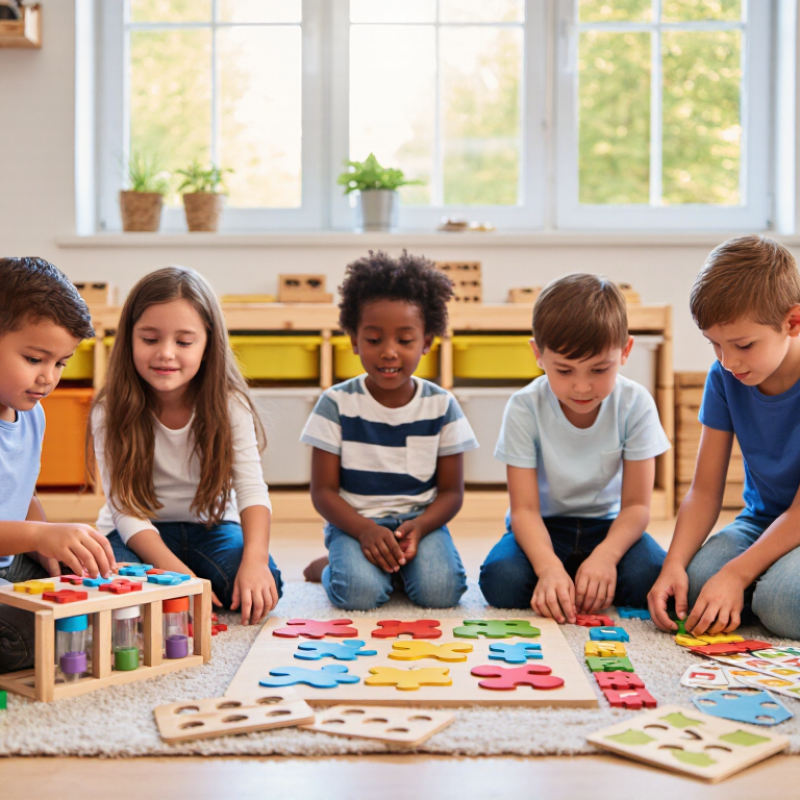
STEM and building toys develop spatial reasoning through visible, hands-on results. Children can connect pieces, test balance, and rebuild failed designs.

Early math toys

Early math toys work best when counting feels natural, such as sorting colorful counters or sharing pretend food.

Language toys

Language toys should support storytelling, sound recognition, and vocabulary. Local languages matter greatly. Direct translation is not enough.

Sensory and role-play toys

Sensory and role-play toys add another important layer. Textured materials, pretend clinics, shops, and kitchens encourage communication and practical problem-solving.

UNICEF emphasizes play-based learning as essential to children’s development, while UNESCO reports that early childhood education supports long-term learning outcomes.

Circana’s global toy industry data also shows changing consumer demand, making durable, multi-skill products more attractive to buyers.

Safety remains non-negotiable.

Buyers should review age grading, small-part risks, material testing, and clear instructions.

Accessibility deserves more attention, too. Some products still assume every child learns, sees, or moves in the same way. That is a weakness.

I would test toys with real children before scaling orders. Packaging claims can sound impressive, but classroom use reveals the truth.

How to Evaluate Safety, Quality, and Age Appropriateness

10 Best Learning & Educational Toys for Global Buyers?

When evaluating educational toys, safety comes before bright colors or clever claims. Check the recommended age, material information, warning labels, and independent test documents. Safety standards differ across markets, so buyers should verify requirements for the destination country. Small detachable parts can create serious risks for younger children. Examine buttons, magnets, wheels, and battery covers carefully. They should not loosen after gentle pulling. Avoid toys with sharp seams, strong chemical odors, or easily broken plastic.

Quality appears through repeated use. Press the corners, twist the joints, and inspect the stitching. A reliable toy should withstand washing, dropping, and daily handling. Clear instructions should explain assembly, cleaning, storage, and supervision. Durable materials matter, but durability alone does not prove educational value. A puzzle should match the child’s skills, not merely look advanced. Some products promise early learning but offer little meaningful interaction. Buyers need to question attractive descriptions.

Age appropriateness is more than a printed number. Consider motor skills, reading ability, attention span, and emotional readiness. A three-year-old may enjoy sorting shapes, while an older child may need problem-solving challenges. Supervision remains important, even with familiar toys. Age labels are helpful, but they are not perfect. Children develop differently, and buyers should allow room for individual needs. I would rather choose a simpler toy that invites repeated play than an impressive product that quickly frustrates a child.

Top Ten Learning Toys and Their Educational Benefits

The ten strongest learning toys are blocks, puzzles, shape sorters, stacking rings, counting pieces, art materials, role-play sets, science kits, musical instruments, and board games. Each supports a different learning pathway. Blocks develop spatial reasoning and planning. Puzzles strengthen visual memory and persistence. Shape sorters teach classification. Stacking rings introduce size and sequence. Counting pieces build early numeracy. Art materials encourage fine-motor control and expression. Role-play sets support language and social understanding. Science kits promote questioning. Musical instruments develop rhythm and listening. Board games teach rules, patience, and basic strategy.

The UNICEF and LEGO Foundation Learning through Play report identifies play as important for cognitive, physical, social, and emotional development. The American Academy of Pediatrics also recommends simple, hands-on toys that encourage shared caregiver interaction. These findings matter for global buyers. An educational toy should invite conversation, not require constant instructions. Clear age guidance, durable materials, accessible design, and internationally recognized safety testing also deserve attention. Circana’s 2024 global toy industry report recorded a 7% sales decline in 2023, increasing pressure to select products with lasting play value.

A puzzle is not automatically educational. Some science kits become decoration after one experiment. That is a weakness worth admitting. Buyers should test whether children can use toys repeatedly, combine them creatively, and explain what they discovered. Open-ended play often outperforms flashy features. Children need room to be wrong. They need time to try again.

10 Best Learning & Educational Toys for Global Buyers

Learning domains supported by popular educational toy types

The score represents the number of commonly recognized learning domains supported by each toy type, including language, numeracy, problem-solving, creativity, spatial reasoning, fine motor skills, social-emotional learning, science, memory, and physical coordination. Actual outcomes depend on age, play quality, and adult interaction.

How Global Buyers Can Compare Suppliers, Costs, and Market Demand

10 Best Learning & Educational Toys for Global Buyers?

Global buyers should compare more than product photos and quoted prices. The strongest educational toy suppliers provide material details, age guidance, test reports, packaging samples, and stable production records. Useful categories include building sets, science kits, logic puzzles, sensory tools, counting games, art materials, language cards, musical toys, geography games, and coding boards. Ask suppliers for sample units before placing a large order.

Cost comparison requires a landed-cost worksheet. Include unit price, tooling, packaging, inspection, freight, duties, storage, and possible returns. A toy priced at $3 may cost twice as much after transport and compliance checks. Compare minimum order quantities and production lead times carefully. One supplier may offer a lower price but require 5,000 units. Another may accept 500 units with better cash-flow control.

Market demand differs by region, school calendar, income level, and language. Review search trends, distributor feedback, classroom purchasing habits, and seasonal sales data. Adapt instructions and packaging to local users. Safety testing must match the destination market, especially for small parts, magnets, paints, and electrical components. I once underestimated translation and relabeling costs; that mistake reduced the expected margin. Forecasts are useful, but they are not proof. A small pilot order can reveal weak packaging, confusing instructions, or limited customer interest before a larger commitment.
FAQS

Which toy categories support early learning best?

Strong categories include building sets, puzzles, counting toys, language tools, sensory toys, art materials, and role-play sets. Hands-on play matters.

How do building toys help children learn?

Children connect pieces, test balance, and rebuild failed designs. These actions develop spatial reasoning, planning, and persistence. A collapsed tower can teach more than a perfect model.

What should buyers look for in early mathematics toys?

Choose toys that make counting feel natural. Colorful counters, sorting pieces, and pretend food can support early numeracy. Numbers should feel usable.

How can language toys support children in different regions?

Language toys should encourage storytelling, sound recognition, and vocabulary growth. Local language support is essential. Simple translation may not be enough.

What benefits do sensory and role-play toys provide?

Textured materials can invite touch and exploration. Pretend clinics, shops, and kitchens encourage communication and practical problem-solving. Children practice real-world situations through play.

Which safety details should buyers check?

Review age guidance, small-part risks, material testing, and clear instructions. Packaging claims can sound impressive, but testing reveals more. Check the details.

How can buyers judge whether a toy has lasting play value?

Ask whether children can use the toy repeatedly and creatively. They should combine parts, try different solutions, and explain discoveries. A science kit used once may become decoration.

Why should educational toys include accessible design?

Children do not all learn, see, hear, or move in the same way. Accessible features can widen participation. Many products still assume too much.

Should buyers test educational toys with children before large orders?

Yes, whenever possible. Real children may ignore complex features or misunderstand instructions. Classroom use can expose weaknesses quickly. My judgment could still be incomplete.

Conclusion

Learning & Educational Toys play an important role in helping children develop curiosity, creativity, problem-solving skills, communication abilities, and independent thinking. Valuable toys should offer meaningful play, encourage active participation, and match a child’s developmental stage rather than provide entertainment alone. This article explores key categories, including building sets, puzzles, science kits, role-play materials, early learning tools, and creative activity toys. It also explains how parents and buyers can assess safety, material quality, durability, age suitability, and educational value before making a purchase.

For global buyers, selecting the right products requires more than comparing prices. The article presents ten useful learning toys and explains the skills each one can support, from fine motor development and logical reasoning to language growth and social interaction. It also highlights practical methods for evaluating suppliers, production quality, packaging, certifications, shipping costs, and market demand. By considering both children’s learning needs and regional purchasing preferences, buyers can make informed decisions and build a reliable, competitive product portfolio.

Evelyn

Evelyn

Evelyn is a highly skilled marketing professional with a strong understanding of the company’s products, customers, and industry landscape. With a thoughtful, research-driven approach, Evelyn transforms complex product information into clear, practical, and engaging content that helps readers make......