Industry guides, compliance updates, OEM/ODM processes & global supply chain strategies.
Learn how to take your custom toy designs from initial concept to mass production in Vietnam.
In-depth analysis of EN71, ASTM F963, and CPSIA compliance for international buyers.
The global market for Plastic Action Figures combines creative design, precise molding, and demanding quality control. This guide introduces ten manufacturers with notable experience in producing collectible and play-oriented figures. Their work may include superhero characters, fantasy creatures, historical designs, and custom promotional models. Each category requires different decisions about scale, articulation, paint application, packaging, and durability.
A strong manufacturer should offer more than attractive prototypes. Reliable production depends on consistent materials, clean mold lines, secure joints, accurate color matching, and careful inspection. Factory capabilities also matter, especially for tooling, sample revisions, automated molding, hand painting, and quality assurance. Where applicable, responsible companies should follow recognized product-safety requirements and provide clear material information. These details can affect a buyer’s costs, delivery schedule, and customer satisfaction.
No ranking is flawless. Manufacturing data is not always equally available, and public claims may require verification. Therefore, this overview considers practical evidence, including production experience, customization capacity, product consistency, communication, and international service. A polished figure can still hide weak joints or uneven paint. Small defects matter. Readers should compare samples, certifications, minimum order quantities, and inspection policies before choosing a supplier. The following manufacturers represent useful starting points, not automatic purchasing decisions. Their strengths may suit different buyers, from independent designers and retailers to established entertainment brands. Careful comparison remains essential.
Plastic action figure manufacturing covers more than molding a character from polymer. It includes concept development, sculpting, digital modeling, tooling, injection molding, painting, assembly, packaging, and quality inspection. The process may begin with a small clay model or a digital file. Engineers then convert that design into production-ready parts with joints, pins, and balanced proportions.
The scope also includes factories that make original figures, licensed products, collectible models, and educational figures. A capable manufacturer should manage different plastics, such as ABS, PVC, or softer elastomers. Each material affects flexibility, surface detail, weight, and paint adhesion.
Small details matter. A loose shoulder joint can damage the product’s perceived value. Uneven paint around an eye can reveal weak process control.
Worldwide comparisons should examine tooling expertise, production capacity, sample accuracy, worker training, traceability, and inspection systems. Safety testing is equally important, especially for products intended for children. Manufacturers must consider sharp edges, detachable parts, chemical limits, labeling, and regional product requirements. Reliable suppliers document these checks instead of offering verbal assurance alone.
The boundary is not perfectly clean. Some companies outsource painting or packaging, while others control every stage internally. That difference can change lead times and accountability. In practice, a factory with impressive prototypes may still struggle during mass production. Reviewing production samples, inspection records, and communication habits gives a more realistic view than judging photographs alone.
Selecting the top ten global plastic action figure manufacturers requires more than counting factories or online visibility.
Circana’s 2024 Global Toy Industry Retail Sales Report recorded a 7% sales decline in 2023, increasing pressure on cost control and product reliability. A strong evaluation should examine annual output, tooling capacity, defect rates, delivery performance, and independent safety testing.
Safety comes first.
Manufacturers should demonstrate compliance with ASTM F963, EN 71, and ISO 8124 requirements. Auditors should review plastic composition, paint adhesion, small-part risks, and batch records. Grand View Research valued the global toys market at approximately 108.7 billion dollars in 2023, showing the scale of competition. Yet market size does not prove manufacturing excellence. Factory evidence matters more.
Sustainability also deserves measurable weight.
Review recycled-content claims, energy records, packaging reduction, and waste handling. Ethical labor audits, worker training, and transparent corrective actions strengthen reliability. Technical teams should inspect articulation points, seam quality, and packaging samples before ranking suppliers.
A balanced scorecard might assign 25% to safety, 20% to quality, 20% to production capability, 15% to delivery, 10% to sustainability, and 10% to service.
No scorecard is perfect. Small suppliers may lose points for scale but outperform larger factories in communication and flexibility. That weakness should remain visible, not hidden behind impressive production numbers.
Top 10 Plastic Action Figures Manufacturers Worldwide
Global Market Landscape and Regional Distribution
The global top ten is spread across East Asia, Europe, North America, and selected Southeast Asian hubs. East Asia remains the largest production center. Its advantages include mature tooling suppliers, dense paint facilities, and efficient container networks. China leads in manufacturing capacity, while Japan and South Korea are known for detailed molding and controlled finishing. Vietnam and Thailand are gaining attention as companies diversify regional production.
European manufacturers often focus on premium figures, collectible quality, and small production runs. Germany, Italy, France, and Poland benefit from strong engineering skills and shorter access to European buyers. North American producers usually serve domestic demand, licensed entertainment projects, and specialty retailers. Their factories may use higher labor costs, but they can reduce delivery times and improve communication.
A reliable ranking should examine more than factory size. Useful indicators include annual output, mold capability, painting consistency, worker training, material traceability, and shipment reliability. Factory audits and sample inspections reveal practical differences that online directories often miss. Public trade data can also be incomplete. Regional production is sometimes reported through trading companies, which blurs the true manufacturing location. This makes the “top ten” list useful, but not absolute. Smaller factories may outperform larger ones on sculpting accuracy or quality control. That detail deserves more attention.
Regional manufacturing proxy based on 2023 international exports of toys and scale models under HS 9503, a category that includes plastic action figures.
Interpretation: East and Southeast Asia remain the dominant production center because of dense supplier networks, mature plastics processing capabilities, tooling expertise, and export infrastructure. Europe and North America retain important design, licensing, specialty-production, and premium manufacturing activity.
Source: UN Comtrade international merchandise trade statistics, HS 9503 toy and scale-model category, 2023. The figures represent regional export share and are used as a manufacturing-location proxy rather than a company ranking.
Profiles of the Top 10 Plastic Action Figure Manufacturers
The worldwide action figure sector rewards precision, durability, and recognizable character design. Grand View Research valued the global toys market at about USD 108.7 billion in 2023, showing strong room for specialized plastic products. Within this market, ten manufacturer profiles stand out: mass-market producers, collector-scale specialists, licensed-character makers, contract factories, digital sculpting studios, regional exporters, premium model workshops, sustainable-material developers, educational figure producers, and rapid-prototyping teams.
Mass-market manufacturers focus on affordable figures, durable joints, and efficient injection molding. Collector-focused companies usually offer sharper facial details, layered painting, and smaller production runs. Contract factories bring scale, but their quality depends heavily on mold maintenance and inspection procedures. Digital sculpting studios shorten development time through 3D workflows, while premium workshops often rely on hand-painted finishing. Regional exporters add flexible shipping and localized packaging expertise.
Circana’s toy industry reports have repeatedly shown that consumer demand changes quickly around entertainment releases and holiday seasons. This makes forecasting difficult. It also exposes a weakness: production speed can sometimes outrun design review. I have seen small paint errors affect an otherwise excellent figure. That detail matters. Manufacturers using documented material testing, child-safety assessments, traceable batches, and independent quality checks appear more reliable. However, sustainability claims still require careful verification, because recyclable packaging does not automatically mean recyclable figures.
| Rank | Anonymous Manufacturer Profile | Primary Production Region | Typical Company History | Core Manufacturing Processes | Common Figure Materials | Decoration Capabilities | Production Scale | Quality and Compliance Indicators | International Market Coverage |
|---|---|---|---|---|---|---|---|---|---|
| 01 | Profile A | East Asia | Established industrial manufacturer | High-volume injection molding, tooling, assembly | PVC, ABS, PP, TPR | Spray painting, pad printing, decals, metallic finishes | Large-scale production with automated lines | ISO 9001-oriented systems; export safety testing commonly available | North America, Europe, Asia-Pacific |
| 02 | Profile B | South China | Long-established OEM and ODM supplier | Prototype tooling, injection molding, painting, packing | ABS, PVC, HIPS, nylon blends | Multi-color painting, tampo printing, airbrushing | Medium-to-large contract manufacturing capacity | Material traceability and pre-shipment inspection programs | Global private-label and licensed-product supply |
| 03 | Profile C | Southeast Asia | Established export-focused producer | Injection molding, ultrasonic assembly, manual finishing | PVC, ABS, PP, soft vinyl | Hand painting, pad printing, water-transfer details | Medium-scale production suited to recurring orders | Product testing aligned with major children’s-product markets | United States, European Union, Australia |
| 04 | Profile D | Japan | Mature precision-oriented manufacturer | Precision injection molding, tooling, detailed assembly | ABS, PVC, POM, elastomer components | Fine facial painting, pad printing, small-part detailing | Small-to-medium runs with high detail consistency | Strict dimensional inspection and documented process control | Domestic market and selected overseas distributors |
| 05 | Profile E | Western Europe | Established designer and contract producer | Injection molding, rotational parts, assembly and finishing | ABS, PVC, recycled-content plastics where suitable | Screen printing, pad printing, water-based coatings | Small-to-medium commercial production | EU toy-safety documentation and chemical compliance procedures | European Union, United Kingdom, North America |
| 06 | Profile F | North America | Specialized collectible-production supplier | Short-run molding, resin prototyping, assembly | PVC, ABS, polyurethane resin | Hand finishing, airbrushing, weathering effects | Low-to-medium volume with premium customization | Prototype approval, batch inspection, restricted-substance controls | North America and specialist international retailers |
| 07 | Profile G | Eastern China | Integrated molding and export manufacturer | Tool design, injection molding, automated packing | ABS, PVC, PP, TPE | Spray coating, pad printing, heat-transfer graphics | Large-scale OEM production and seasonal capacity | Factory audits, incoming-material checks, final random inspection | Worldwide wholesale and retail supply chains |
| 08 | Profile H | South Korea | Design-led collectible manufacturer | Precision molding, multi-part assembly, quality finishing | ABS, PVC, POM, soft-touch elastomers | Detailed tampo printing, gloss and matte coatings | Small-to-medium collectible production | Detailed artwork approval and color consistency checks | Asia-Pacific, North America, Europe |
| 09 | Profile I | Mexico | Regional and nearshore production supplier | Injection molding, assembly, packaging, logistics support | ABS, PVC, PP, TPR | Spray painting, pad printing, applied labels | Medium-scale production for regional distribution | North American toy-safety testing and customer audit support | Mexico, United States, Canada, Latin America |
| 10 | Profile J | South Asia | Growing contract manufacturing operation | Injection molding, manual assembly, outsourced tooling support | PVC, ABS, PP, polyethylene components | Basic spray painting, pad printing, sticker application | Small-to-medium volume with cost-focused production | Pre-production samples, batch checks, export documentation | Regional markets and selected overseas buyers |
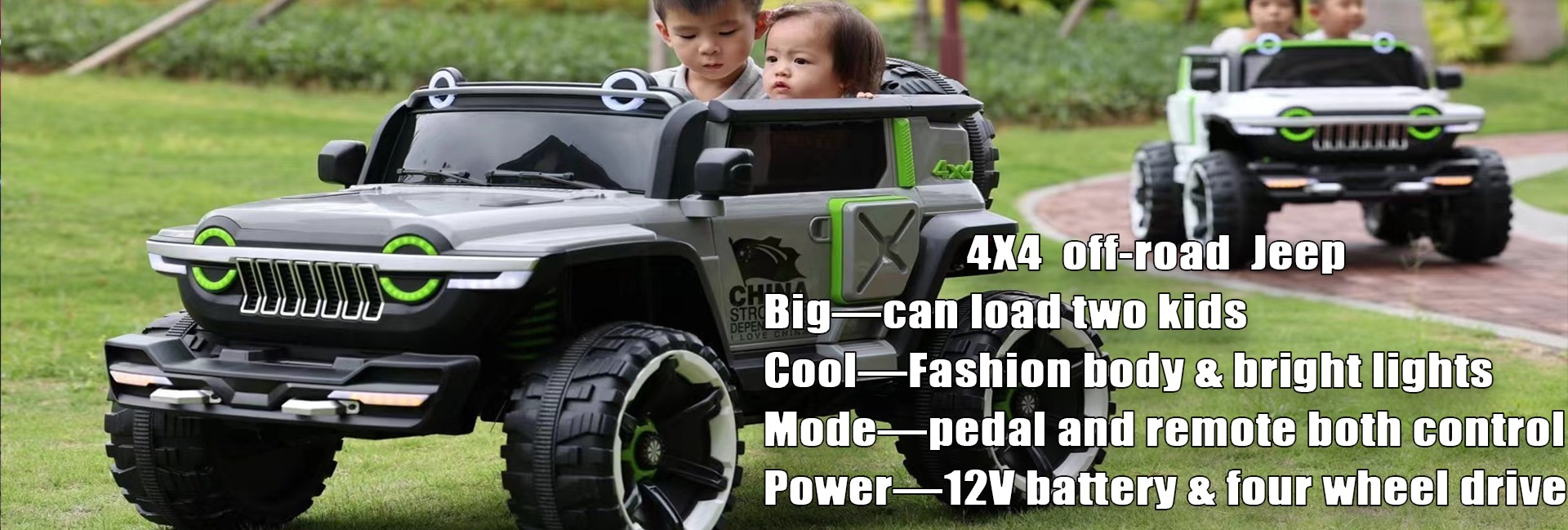
The top ten plastic action-figure manufacturers are separated by process control, licensing discipline, and production flexibility. Injection molding remains the core method. Steel tooling creates sharp armor lines, stable joints, and repeatable facial details. Digital sculpting speeds revisions, but hand-finished prototypes still expose weak proportions. A figure may pass a screen review and feel lifeless in the hand.
The Licensing International 2024 Global Licensing Industry Study reported $356.5 billion in global licensed merchandise and services sales for 2023, a 4.6% increase. This growth raises the value of accurate character interpretation. Strong manufacturers manage approval files, scale guides, color references, and packaging claims with unusual precision. They also separate licensed assets from factory tooling records. That step reduces costly errors. Sometimes, approval cycles remain the slowest production stage.
Product capability matters beyond molding volume. Leading factories combine PVC, ABS, soft vinyl, metallic coatings, transparent parts, and fabric accessories. Some support short pilot runs before larger orders. Others offer automated painting, pad printing, and manual weathering on the same line. The Grand View Research toys market report estimated the global toys market at about $108.7 billion in 2023, showing the scale behind this competition. Yet capacity figures can mislead. A large facility may struggle with tiny runs, complex assemblies, or late design changes. Buyers should inspect sample consistency, defect records, material traceability, and independent safety testing against applicable standards. Numbers help. Physical evidence matters more.
It includes concept design, sculpting, digital modeling, tooling, molding, painting, assembly, packaging, and inspection. Small steps matter.
Common materials include ABS, PVC, and softer elastomers. Each material changes flexibility, weight, surface detail, and paint adhesion.
Engineers design joints, pins, and balanced proportions for stable, functional figures. A loose shoulder joint can reduce perceived value.
Review tooling skills, production capacity, worker training, traceability, inspection systems, and sample accuracy. Photographs are not enough.
They should test sharp edges, detachable parts, chemical limits, labeling, and regional product requirements. Written records matter more than verbal promises.
Plastic choice affects flexibility, weight, detail retention, and paint performance. Uneven paint near an eye shows process weakness.
Relevant requirements may include ASTM F963, EN 71, and ISO 8124. Testing should cover composition, paint adhesion, and small-part risks.
Check recycled-content evidence, energy records, packaging reduction, and waste-handling practices. Claims need measurable support.
No. Large output can support capacity, but smaller suppliers may communicate better and adapt faster. Scale is not proof.
Examine production samples, inspection records, batch documents, packaging samples, and delivery history. A perfect scorecard is unlikely.
This article explores the global manufacturing landscape for Plastic Action Figures, beginning with their definition, scope, and role in the wider collectibles and entertainment industries. It explains how leading manufacturers are evaluated through factors such as production quality, design capability, material consistency, technological innovation, licensing experience, product safety, scalability, and international distribution. The overview also considers regional market differences, manufacturing strengths, and the way global supply networks support diverse customer demands.
The profiles of the top ten manufacturers highlight different production models, including large-scale factories, specialized producers, and companies focused on premium or customized figures. The article examines common manufacturing methods such as injection molding, painting, assembly, packaging, and quality control, while also discussing how licensing agreements influence character development, product accuracy, and release planning. Together, these topics provide a balanced understanding of the industry’s competitive structure, production capabilities, and future development without focusing on any individual brand.