Industry guides, compliance updates, OEM/ODM processes & global supply chain strategies.
Learn how to take your custom toy designs from initial concept to mass production in Vietnam.
In-depth analysis of EN71, ASTM F963, and CPSIA compliance for international buyers.
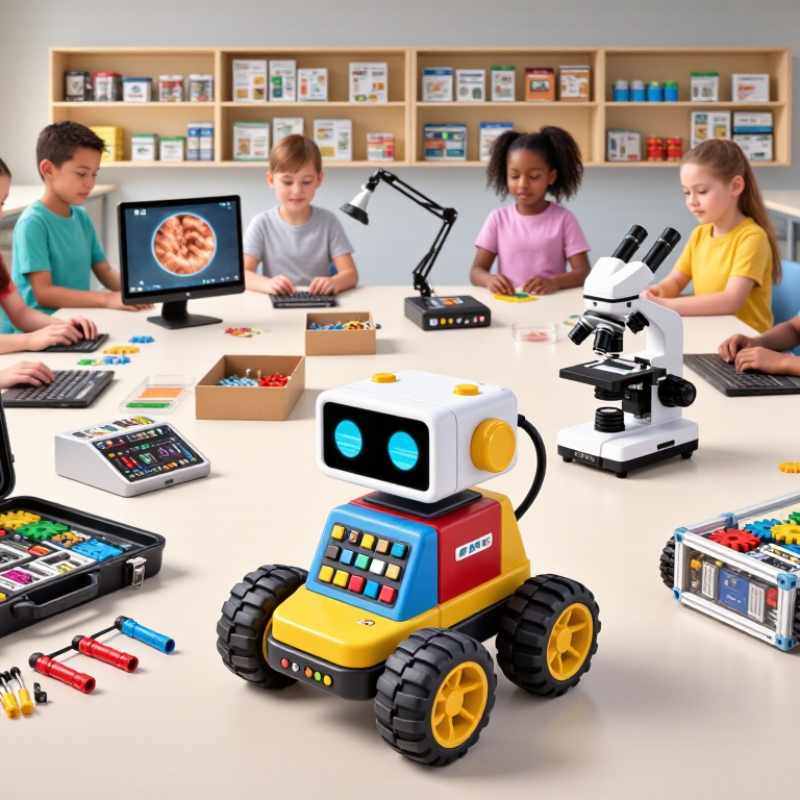
Choosing Educational Electronics for Kids in bulk requires more than comparing prices. Schools, camps, libraries, and family organizations need tools that survive curious hands and repeated use. A flashing gadget may attract attention, but durable learning value matters more. This guide introduces ten practical choices, including coding robots, circuit kits, digital microscopes, programmable vehicles, and beginner-friendly engineering sets. Each category deserves attention for its learning purpose, age suitability, repairability, and ease of supervision.
Small details can shape the buying experience. A classroom robot should have clear controls, sturdy wheels, and instructions that children can understand. A circuit kit should include insulated components, labeled parts, and safe power sources. Reliable products usually provide accessible manuals, responsive customer support, and transparent safety information. Buyers should also confirm battery requirements, replacement-part availability, warranty terms, and relevant testing standards before placing large orders.
The best option depends on the children, not the trend. Younger learners may need colorful, tactile activities, while older students may prefer coding challenges or sensor-based projects. Teacher feedback, product demonstrations, and independent reviews can reveal problems that catalog photos hide. No buying guide is flawless. Some devices may seem educational but offer limited replay value after the first session. Others might require more adult support than expected. Careful trial use, realistic budgeting, and honest reflection can make bulk purchasing more useful, reliable, and rewarding. Expect a few surprises. That is part of learning, too.
Educational electronics are learning tools that combine physical interaction with digital feedback. They include coding boards, electronic building kits, programmable robots, digital microscopes, and circuit sets. These tools help children explore cause and effect through direct action. A button can trigger a light, while a simple program can move a motor. Learning becomes visible and easier to discuss.
For schools and learning centers, buying educational electronics in bulk can support consistent activities. Teachers can guide small groups using similar equipment and shared lesson plans. However, devices should match children’s ages, abilities, and learning goals. A colorful screen does not guarantee meaningful learning. Research-based activities usually encourage problem-solving, creativity, communication, or fine motor control. Safety also matters. Products should use suitable power sources, clear instructions, durable parts, and protected connections. Privacy settings deserve attention when devices collect information.
Tips: Test one unit before placing a bulk order. Ask teachers to observe setup time, durability, and student engagement. Keep spare cables and labeled storage boxes available. Short activities often work better than long demonstrations. Avoid buying too many advanced kits at once. Children may need time to understand basic circuits first. A practical weakness remains: some electronics become exciting only during the first lesson. Regular reflection can reveal whether they support learning or merely create noise.
The chart compares generic educational electronics by a 0–100 learning-support index. The index is calculated from three practical criteria: hands-on practice, immediate feedback, and transferability to classroom learning. It does not use company, brand, or sales data.
Programmable robots, circuit-building kits, and coding boards score highly because they let children test ideas, observe results, and revise solutions. Digital microscopes and sensor kits support scientific observation, while language devices and graphing calculators reinforce communication and mathematical reasoning.
Buying educational electronics in bulk requires more than comparing unit prices. Start with learning purpose, age range, and classroom conditions. UNESCO’s 2023 Global Education Monitoring Report states that only 40% of primary schools worldwide have internet access for educational purposes. Therefore, devices should offer meaningful offline functions, not depend on constant connectivity. Assess screen brightness, tactile controls, readable audio, and accessibility settings. A six-year-old should navigate without delicate gestures. Drop-resistant casing and replaceable parts matter when 30 devices share one storage cabinet.
Privacy deserves equal attention. Check data collection, parental controls, local storage, update support, and clear deletion procedures. Avoid products requiring unnecessary accounts. OECD PISA 2022 reported that about 30% of students were distracted by digital devices in most mathematics lessons. More technology is not automatically better. Test a small batch with teachers and children before placing a large order. Measure setup time, battery life during a real school day, noise levels, and curriculum alignment. My first checklist missed charging time. That mistake changed the purchasing plan.
Tips: Request a sample unit. Test it for one week. Use a checklist with teachers. Compare warranty length, repair access, and total ownership cost. Keep 10% spare units for damage and loss. This may be excessive, but shortages interrupt learning. Review the decision after one term, because first impressions can be wrong.
Educational electronics can turn a classroom table into a small engineering lab. Useful choices include coding boards, snap circuits, light sensors, mini motors, robotics kits, and programmable sound modules. These tools support STEM skills while leaving room for creative exploration. Children can build a traffic light, test a moisture sensor, or design a moving paper creature.
Choose products with clear instructions, reusable parts, insulated wires, and age-appropriate voltage levels. Durable components matter when twenty students share materials. Teachers should also check whether replacement pieces are easy to identify and store.
In practical lessons, color-coded cables and labeled compartments save valuable time. Not every kit works perfectly. Some instructions may confuse younger learners, so adult testing remains important before group use. That small weakness can reveal better teaching opportunities.
Tips: Buy a few extra sensors and connectors. They disappear quickly. Mix guided projects with open challenges, such as creating a night-light with three different materials. Ask students to predict results before connecting power. Keep batteries separated during storage. Record common mistakes, then improve the next lesson. A quiet reflection sheet can show whether children understood the circuit or simply copied it. Bulk buying should support curiosity, not produce identical projects.
Buying educational electronics in bulk works best when age, learning goal, and classroom reality meet. For ages 3–5, choose large-button audio players, light panels, and simple digital microscopes. These devices support language, observation, and fine-motor practice without demanding reading skills. For ages 6–8, programmable robots and visual coding kits can connect sequencing with mathematics. Keep activities short and tangible. Children should move a sensor, test a command, and see the result.
For ages 9–12, circuit kits, data loggers, and beginner 3D design tools fit inquiry-based learning. Match each device with a measurable goal, such as recording temperature or explaining a design change. For teenagers, coding boards, simulation tools, and digital fabrication equipment can support engineering and career exploration. OECD’s PISA 2022 report found that moderate school use of digital devices was associated with stronger mathematics performance, while distraction reduced results. Association is not proof of causation.
UNESCO’s 2023 Global Education Monitoring Report warns that technology should serve teaching, not replace it. That warning matters during bulk purchasing. A room full of identical tablets may look efficient but fail different learners. Check accessibility, offline functions, repair options, battery life, and teacher training before ordering. Common Sense Media’s 2021 census reported high recreational screen use among children and teenagers, so learning devices need clear boundaries. I would still question any age chart that feels too neat. Children develop unevenly, and a five-year-old may outperform an eight-year-old in patience, curiosity, or problem-solving. Pilot a small set first. Mistakes are useful data.
| No. | Device Category | Recommended Age | Primary Learning Goals | Useful Features | Suggested Bulk Quantity | Typical Bulk Unit Cost (USD) | Best Classroom Use |
|---|---|---|---|---|---|---|---|
| 1 | Screen-Free Coding Robot | 4–7 years | Sequencing, cause and effect, problem-solving, early computational thinking | Directional buttons, grid movement, sound or light feedback, reusable activity cards | 1 per 2–3 children | $35–$80 | Short guided lessons, floor-grid challenges, and partner activities |
| 2 | Programmable Educational Robot | 7–12 years | Algorithms, debugging, geometry, collaboration, introductory robotics | Block-based coding, distance sensors, line-following functions, rechargeable battery | 1 per 2 children | $45–$120 | Team projects involving navigation, obstacle avoidance, and simple competitions |
| 3 | Beginner Coding Board Kit | 8–13 years | Programming logic, inputs and outputs, data collection, creative technology | Visual programming support, buttons, LEDs, motion or temperature sensors, USB connection | 1 per student | $20–$55 | Individual coding exercises and small interactive prototype projects |
| 4 | Modular Electronics Circuit Kit | 8–14 years | Electrical circuits, scientific inquiry, measurement, engineering design | Snap or plug connectors, battery holder, switches, motors, buzzers, and LEDs | 1 per 2–4 children | $25–$75 | Hands-on lessons about open and closed circuits, polarity, and energy transfer |
| 5 | Digital Microscope | 8–14 years | Observation, classification, scientific recording, biology and materials science | USB or wireless connection, adjustable LED lighting, image capture, 40×–400× magnification | 1 per 3–4 children | $30–$100 | Small-group specimen investigations and digital lab journals |
| 6 | Programmable Rover or Robotic Car Kit | 10–16 years | Mechanical design, coding, physics, sensor integration, iterative testing | Wheeled chassis, motor control, ultrasonic or infrared sensors, block and text coding options | 1 per 2–3 children | $50–$150 | Engineering challenges such as autonomous driving and payload transport |
| 7 | Portable Environmental Sensor Kit | 10–16 years | Data literacy, environmental science, graphing, evidence-based reasoning | Temperature, humidity, light, sound, or air-quality sensors with data logging | 1 per 3–5 children | $40–$130 | Outdoor investigations, school energy audits, and environmental monitoring projects |
| 8 | Digital Drawing and Animation Tablet | 8–16 years | Visual communication, design thinking, storytelling, digital creativity | Pressure-sensitive stylus, palm rejection, USB connection, drawing and animation software support | 1 per student or 1 per 2 students | $35–$120 | Illustration, stop-motion planning, diagram creation, and multimedia assignments |
| 9 | Audio Recording and Podcast Kit | 10–17 years | Communication, language development, media literacy, research, and teamwork | USB microphone, headphones, pop filter, basic recording software, and portable storage | 1 per 3–5 children | $45–$140 | Interviews, language practice, documentary projects, and student presentations |
| 10 | Entry-Level 3D Design and Printing Set | 12–17 years | Spatial reasoning, computer-aided design, prototyping, and product development | Beginner 3D design software, filament-based printer, removable build plate, and safety enclosure where available | 1 printer per 4–8 children | $180–$450 | Design-build-test cycles, assistive-device concepts, and model-making projects |
| Cost ranges are indicative estimates for classroom-oriented bulk purchasing and can vary by storage capacity, accessories, software, quantity, shipping, and local taxes. For younger learners, select devices with rounded edges, low-voltage power, protected battery compartments, and supervised use. | |||||||
Buying ten educational electronics in bulk changes the risk profile. A single faulty charger can affect an entire class. The U.S. Consumer Product Safety Commission reported 231,700 toy-related emergency-department injuries involving children under 15 in 2023. This figure covers all toys, not electronics (CPSC, 2024). It still supports careful screening. Request batch traceability, age grading, recall checks, and test documentation before purchase. Avoid vague “child-safe” claims.
For powered kits, verify applicable requirements in your market. Useful references may include ASTM F963, EN 71, IEC 62133-2 for rechargeable cells, and IEC 62368-1 for certain ICT equipment. Requirements differ by product and jurisdiction. Ask for recent laboratory reports, declarations, charging instructions, and replacement-battery controls. Inspect every carton on arrival. Look for cracked insulation, loose battery doors, sharp edges, and heat during charging. Keep damaged units out of service. This step is slow. It is also easy to skip.
Classroom management deserves equal budget. OECD’s PISA 2022 report found that about 30% of students across OECD countries were distracted by digital devices in most or every mathematics lesson. Assign numbered kits, charging zones, two-minute inventory checks, and a clear stop-using signal. Store cables separately. Limit shared accounts and unnecessary data collection. UNESCO’s 2023 Global Education Monitoring Report says technology works best with clear learning goals, not novelty. I would keep a small reserve of devices, although budgets resist it. Plans can be too optimistic about lost parts, charging time, and teacher workload.
They combine hands-on activity with digital feedback. A button may light an LED, or a program may move a motor. Children can see cause and effect.
Children aged three to five may use large-button audio tools, light panels, or simple digital microscopes. These support language, observation, and fine-motor practice. Keep controls clear and sturdy.
Visual coding kits and programmable robots can teach sequencing and basic mathematics. Children should move a sensor, test a command, and observe the result. Short activities work better.
Circuit kits, data loggers, and beginner design tools support inquiry from ages nine to twelve. Teenagers may explore coding boards, simulations, and digital fabrication. Each device needs a measurable learning goal.
Test one unit before ordering many. Ask teachers to check setup time, durability, engagement, and repair needs. Keep spare cables and labeled storage boxes. A small pilot can expose problems.
Request age guidance, batch information, recall checks, and recent safety documentation. Inspect cartons for cracked insulation, sharp edges, loose battery covers, or charging heat. Remove damaged units immediately. This step is easy to skip.
Assign numbered kits and create a charging area. Use two-minute inventory checks and a clear stop-using signal. Store cables separately. Keep a few spare devices, despite tight budgets.
Use offline functions when possible, and collect only necessary information. Limit shared accounts and explain clear device boundaries. Digital tools should serve lessons, not replace teaching. A bright screen is not automatically useful.
Link each activity to problem-solving, communication, creativity, observation, or motor control. Review student work and teacher workload after several lessons. Some devices impress children once, then become noise. That possibility deserves honest reflection.
Educational Electronics for Kids are learning tools that combine technology with hands-on discovery, helping children build skills in science, technology, engineering, mathematics, creativity, and problem-solving. This guide explores how interactive devices, coding tools, robotics kits, digital microscopes, and creative electronics can make learning more engaging. It also explains the key features to review before buying in bulk, including durability, ease of use, age suitability, educational value, accessibility, and reliable support.
Choosing the right devices requires matching them with children’s developmental stages and specific learning goals. Younger learners may benefit from simple, safe, and highly visual tools, while older students can explore programming, engineering challenges, and open-ended design projects. The guide also highlights practical considerations for schools and organizations, such as bulk pricing, safety certifications, storage, charging routines, device sharing, supervision, and classroom management. With thoughtful planning, these electronics can support inclusive, structured, and enjoyable learning experiences.