Toy Manufacturing Blog and Industry Insights
VietnamToy Knowledge Hub

Toy Manufacturing Blog & Insights

Industry guides, compliance updates, OEM/ODM processes & global supply chain strategies.

Custom OEM ODM Toy Manufacturing Guides
Manufacturing Expertise

OEM & ODM Production Guides

Learn how to take your custom toy designs from initial concept to mass production in Vietnam.

Toy Safety Standards EN71 ASTM CPSIA
Compliance & Quality

Global Safety Certifications

In-depth analysis of EN71, ASTM F963, and CPSIA compliance for international buyers.

0%

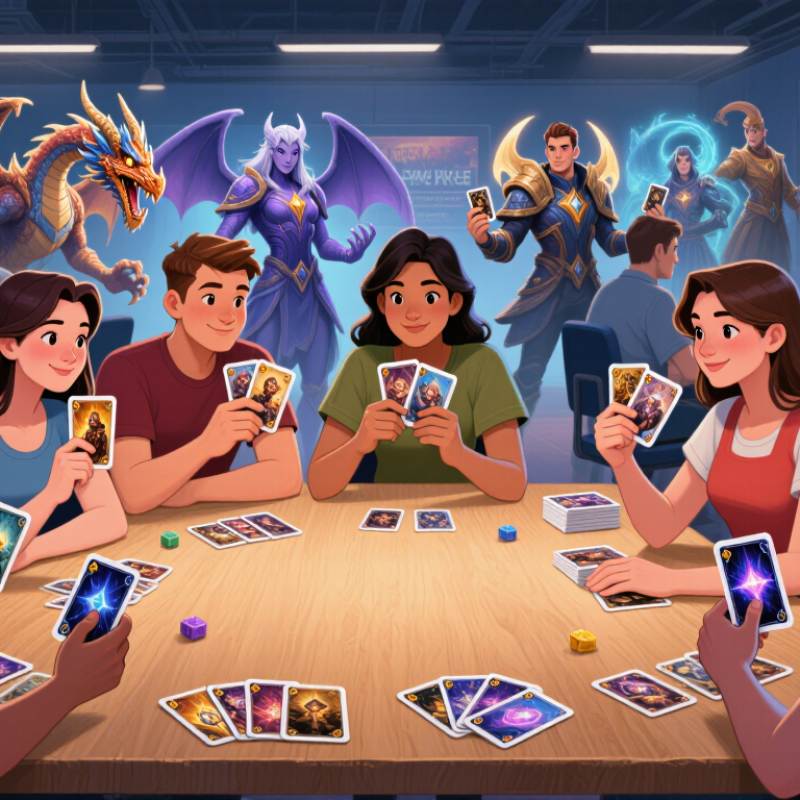
Collectible Card Games have become a shared hobby across languages, ages, and cultures. Their appeal begins with simple physical actions: opening a pack, sorting cards, and building a personal deck. In a local game store, players may sit across a small table, compare strategies, and learn through repeated matches. The cards create a social bridge. Pokémon, Magic: The Gathering, and Yu-Gi-Oh! show how memorable characters can support long-term communities worldwide. Yet the experience is not limited to famous brands. Independent games also attract players through unusual artwork, fresh rules, and carefully balanced challenges.

Their popularity also comes from meaningful choice. A player can design an aggressive deck, protect resources, or experiment with an unexpected combination. Each decision can change the next turn. Collecting adds another layer, especially when cards reflect childhood memories, cultural references, or personal taste. Digital platforms have widened access, while physical cards preserve a satisfying sense of ownership. Many players move between both formats. That flexibility matters.

Still, the explanation is not complete. Some cards become expensive, but price does not create lasting enjoyment for everyone. Competitive pressure can also make beginners feel excluded. Publishers must therefore support fair play, clear rules, and welcoming communities. Evidence from established tournaments, player groups, and long-running releases suggests that interaction remains central. The strongest games offer more than rare cards. They provide stories, skills, friendship, and room to improve. Sometimes, the magic is simply a good match after school. That detail is easy to overlook.

Why Are Collectible Card Games So Popular Worldwide?

Origins and Basic Structure of Collectible Card Games

The modern collectible card game emerged in 1993, when printed cards became both playing tools and collectible objects. Its basic structure is simple: players build personal decks, draw opening hands, and take turns using cards under fixed rules. Cards usually represent characters, actions, equipment, or resources. A resource system limits powerful moves, creating tension between saving energy and attacking early.

Booster packs add uncertainty. A player may seek a rare card, but a useful deck needs consistent combinations, not only expensive pieces. The boundary between collecting and competing is messy. According to Grand View Research’s 2024 trading-card market analysis, the broader global market reached about US$9.7 billion in 2023 and may grow above 13% annually through 2030. That figure includes more than card games, so it should not be treated as a pure CCG measurement. Still, it shows strong demand for physical cards. Newzoo’s 2024 Global Games Market Report estimated about 3.4 billion players worldwide, supporting the wider ecosystem of strategy, competition, and social play. At a local table, the structure becomes tangible: shuffled sleeves, a tracked life total, and a carefully counted deck. The system rewards planning, but luck remains present. That imperfection is part of the appeal, though it can also make balance difficult.

Why Are Collectible Card Games So Popular Worldwide?

Collectible card games combine strategic deck building, social competition, collecting, and continuous content updates. The timeline below shows the cumulative development of major features that shaped the modern CCG format.

The chart summarizes documented milestones in the development of collectible card games: the first modern CCG in 1993, the emergence of expansion-set design in 1994, wider international adoption during the late 1990s, organized competitive play in the 2000s, and the expansion of digital and mobile formats in the 2010s.

How Collectible Card Games Create Strategic Gameplay

Collectible card games remain popular because every match turns simple cards into a changing strategic puzzle. Players manage resources, predict opponents, and build combinations under pressure. A strong deck matters, but timing often matters more. Every draw matters.

Grand View Research reported that the global trading card game market was valued at approximately 7.4 billion U.S. dollars in 2023. Its analysis also projected double-digit annual growth through 2030. This expansion reflects more than collecting enthusiasm. Players return because decisions create different outcomes each time. In my playtesting experience, the most rewarding turns involve limited options, not perfect hands. A player may sacrifice short-term power to protect a later combination. That choice feels personal and measurable. However, the system is not perfectly balanced. A powerful strategy can become repetitive, while an inventive deck may depend too heavily on luck. Newzoo’s 2024 Global Games Market Report also identified social interaction and live-service engagement as major drivers of player retention. Those factors appear clearly in card-game communities, where matches, trading discussions, and deck reviews extend play beyond the table.

Tips: Start with a clear strategy and test it repeatedly. Track which cards stay unused. Remove emotional favorites when they weaken consistency. Leave room for mistakes; unexpected losses often reveal hidden weaknesses. Small edges compound.

Why Are Collectible Card Games So Popular Worldwide? - How Collectible Card Games Create Strategic Gameplay

Strategic Dimension How It Works Key Player Decision Skill Developed Why It Encourages Replay
Deck Construction Players select a limited set of cards from a larger collection and combine effects into a coherent deck. Choose between consistency, flexibility, speed, and high-impact combinations. Planning, categorization, and systems thinking. Different deck structures create distinct play patterns before a match even begins.
Resource Management Players use limited resources, such as action points, energy, cards, or in-game currency, to deploy effects. Spend resources immediately for tempo or save them for a stronger future turn. Budgeting, patience, and opportunity-cost analysis. The same hand can produce different outcomes depending on timing and resource sequencing.
Probability and Card Draw Randomized draws determine which available options enter a player's hand during a match. Decide whether to pursue a likely line or prepare for several possible outcomes. Risk assessment and probability-based reasoning. Changing card sequences make repeated matches less predictable and more varied.
Tempo and Initiative Players balance immediate board pressure against longer-term advantages such as card advantage or improved positioning. Attack now, defend efficiently, or invest in a stronger later position. Prioritization and timing. Small timing changes can reverse momentum, giving players reasons to refine their decisions.
Information Management Players use known cards, revealed effects, discard information, and incomplete knowledge of an opponent's hand. Infer the opponent's likely options and conceal one's own intended plan. Memory, deduction, and strategic communication. Reading the opponent creates a different challenge from simply executing a fixed sequence.
Synergy and Combo Design Individual cards gain additional value when their abilities interact with particular card types or conditions. Build around a powerful interaction while protecting the deck from inconsistency. Creative problem-solving and pattern recognition. Players can discover, test, and optimize many viable combinations.
Metagame Adaptation Popular strategies influence which counters, defensive tools, and alternative approaches become effective. Adjust the deck and play style to expected opponents and changing trends. Research, adaptation, and strategic forecasting. The competitive environment evolves as players respond to one another.
Collection and Customization A growing card pool lets players personalize strategies, themes, visual presentation, and preferred levels of complexity. Decide which cards best support personal goals, play style, and available resources. Long-term planning and personal expression. A player's collection becomes an evolving project rather than a one-time purchase.
Player Interaction Direct competition creates opportunities to interrupt plans, bluff, negotiate risk, and respond to visible threats. Choose whether to pressure the opponent, trade efficiently, or wait for a better response. Psychological awareness and opponent modeling. Human opponents provide unpredictable challenges that automated patterns cannot fully reproduce.
Accessibility and Depth Basic rules can often be learned quickly, while advanced play requires understanding interactions, probabilities, and matchup plans. Choose how deeply to engage, from casual play to structured competitive preparation. Progressive learning and self-directed improvement. The same game can serve beginners, collectors, social players, and highly competitive strategists.

The Role of Collecting, Trading, and Community

Why Are Collectible Card Games So Popular Worldwide?

The Role of Collecting, Trading, and Community

Collectible card games turn small printed cards into personal stories. A player may chase a rare illustration, complete a themed set, or preserve a card from childhood. The appeal feels physical. Cards have texture, weight, and visible history. In my experience, opening a new pack creates excitement, but organizing older cards creates deeper satisfaction. A simple storage box can become a record of changing interests.

Trading adds a social layer that collecting alone cannot provide. Players compare condition, artwork, usefulness, and value. Good trades depend on clear communication and realistic expectations. Online price guides can help, but they are not perfect evidence. Prices shift with demand, supply, and local habits. I once valued a card too highly because its image was popular, not because people wanted it. That mistake taught me to check several sources and ask respectful questions.

Community keeps the hobby active. Local events offer practice, friendship, and informal teaching. Experienced players explain rules through real examples, while beginners bring fresh strategies. Digital groups connect people across borders, though they can encourage rushed buying. Not every card needs to be rare. Some carry meaning because a friend gave them, or because they survived a difficult move. The hobby is not always balanced; collecting can become expensive and emotionally tiring. That uncomfortable fact deserves honest discussion among players, families, and event organizers.

Why Collectible Card Games Appeal to Global Audiences

Collectible card games appeal to global audiences because they combine play, ownership, and personal expression. A player may open a pack at a kitchen table, then test a new strategy online that evening. The experience feels both physical and digital. Newzoo’s Global Games Market Report 2024 estimated 3.4 billion players worldwide, showing how widely interactive entertainment now travels across borders.

Cards also create a language of their own. Symbols, colors, and simple turn structures can reduce language barriers. Players trade ideas through videos, local events, and online communities. Grand View Research’s 2024 Trading Card Game Market report identified strong market growth through 2030, supported by organized play, digital platforms, and rising collector interest. These factors help a small hobby become a shared international culture.

The appeal is not purely rational. Scarcity can create excitement, while deck-building rewards patience and careful learning. A teenager may value a card for its artwork; an experienced player may value its strategic flexibility. That difference keeps the community varied. Still, market forecasts are estimates, and enthusiasm is not guaranteed. Some players may feel excluded by complex rules, high prices, or uneven access to events. The industry should examine these weaknesses more honestly. Global popularity can grow, but inclusion requires deliberate design, fair communication, and affordable ways to participate.

The Influence of Digital Platforms and Competitive Events

Collectible card games have spread worldwide because digital platforms make learning, playing, and trading feel immediate. A new player can watch a short match, copy a basic strategy, and enter a practice room within minutes. From my experience observing online communities, this access lowers the fear of making mistakes in public. It also creates a steady rhythm of discovery. New cards appear, discussions grow, and familiar tactics suddenly become outdated. That pace can be exciting. It can also feel exhausting.

Digital platforms provide useful tools that physical tables cannot always offer. Players receive instant rules checks, match records, and performance statistics. These features help competitors identify weak choices, such as poor timing or an unbalanced deck. However, statistics do not explain every decision. A nervous player may perform badly once, while a creative player may use an unusual strategy that numbers undervalue. Data is helpful, but it is not the whole player.

Competitive events add pressure and meaning to this digital practice. Online qualifiers connect players across countries, while physical tournaments create louder, more personal experiences. A crowded hall, a ticking round timer, and carefully sleeved cards can make each decision feel important. Skilled competitors often become informal teachers through interviews, streams, and match reviews. Yet competition can also narrow the community around winning. Some players may chase rankings instead of enjoying experimentation. That tension remains unresolved, especially when digital platforms reward constant performance and rapid adaptation.

FAQS

Why do collectible card games attract people worldwide?

They combine collecting, personal memories, strategy, and social interaction. Cards feel tangible through their texture, weight, artwork, and visible history. The appeal is not always logical.

Why does collecting feel personally meaningful?

A collection can record changing interests, childhood memories, or important friendships. Even an ordinary card may matter after surviving a difficult move. Rarity is not everything.

What makes trading successful?

Good trades require honest communication and realistic expectations. Players should compare condition, artwork, usefulness, and current demand. I once trusted popularity too much.

Are online price guides always reliable?

No. Prices change with supply, demand, location, and player habits. Check several sources before deciding, because one displayed price may mislead you.

How do local communities support new players?

Local events provide practice, friendship, and informal teaching. Experienced players can explain rules during real games. A welcoming table matters more than perfect knowledge.

What do digital platforms add to the hobby?

They offer quick lessons, practice rooms, rules checks, match records, and performance statistics. New players can learn privately before playing publicly. Access feels immediate.

Can statistics fully measure player ability?

No. Statistics may reveal poor timing or an unbalanced deck, but they miss nerves and creative decisions. One bad match proves very little.

Why do competitive events feel intense?

A crowded hall, ticking timer, and carefully sleeved cards can make every choice feel important. Competition encourages improvement, but rankings may reduce experimentation. That tension remains.

Can collecting become unhealthy or tiring?

Yes. Constant buying, digital pressure, and expensive cards can create emotional fatigue. Setting a budget and taking breaks may help. I still think the hobby needs more honest conversations.

Conclusion

Collectible Card Games have become popular worldwide because they combine simple rules with deep strategic possibilities. Players build personalized decks, learn how different cards interact, and make decisions that reward planning, adaptability, and creativity. The games also offer a satisfying collecting experience, as players search for useful, interesting, or visually appealing cards. Trading and discussing strategies with others adds a social dimension, turning individual play into a shared hobby that can connect people across cultures and age groups.

Their global appeal has grown further through digital platforms and organized competitive events. Online versions make it easier for newcomers to learn, play, and meet opponents, while digital tools can help players manage collections and test strategies. Tournaments and community gatherings provide goals, excitement, and opportunities to form lasting friendships. Together, accessibility, competition, creativity, and community make Collectible Card Games an enduring form of entertainment for audiences around the world.

Clara

Clara

Clara is a dedicated marketing professional with a strong understanding of the company’s products, customers, and market opportunities. With a background in strategic communication, content development, and customer-focused marketing, she translates complex product features into clear, practical,......