High-Gain Educational Science Kits & STEM Hardware
Engineered for global compliance (EN71, ASTM F963, CPSIA). Ready for OEM private labeling, custom curriculum integration, and institutional bulk distribution.
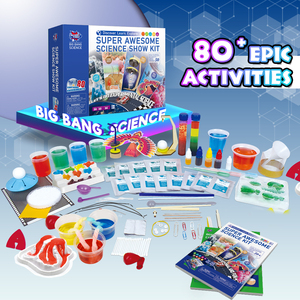
80+ Science Experiment Kit Hot Super Science & Engineering DIY Kit
- Target Age: 6-8, 12-14 Years
- Materials: Eco ABS & Safe Reagents
- Certification: EN71 / ASTM F963
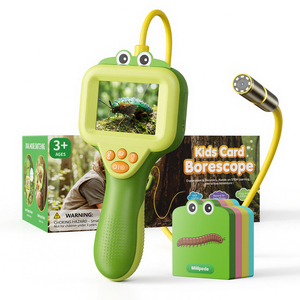
STEM Talking Kids Borescope Kit With 100 Cards & 2.4" IPS Screen
- Sensor: 2MP HD Camera Probe
- Display: 2.4-inch IPS Panel
- Extras: 100 Learning Cards
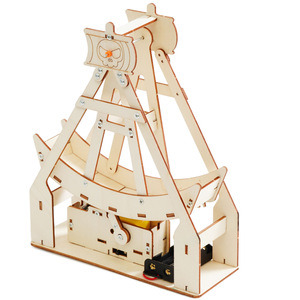
DIY Wooden Electric Pirate Ship & Amusement Facility Engineering Kit
- Substrate: Precision Laser-Cut Wood
- Power: 3V DC Electric Motor
- Focus: Physics & Mechanical Gearing
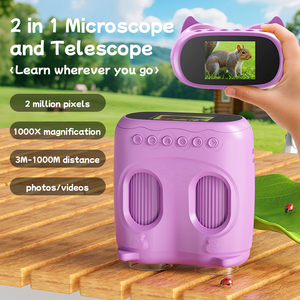
Portable Children Digital Microscope Science Experiment Kit
- Optics: Adjustable Digital Zoom
- Form Factor: Ergonomic Handheld
- Lighting: Dual LED Illumination
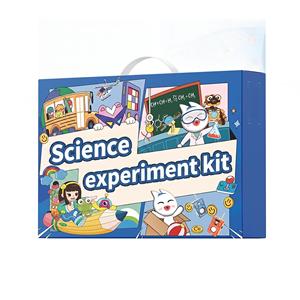
Back-to-School Modular DIY STEM Science Experiment Kit
- Modular Circuits & Chemistry
- Packaging: Color Box / OEM Bag
- Grade Level: Primary & Middle School
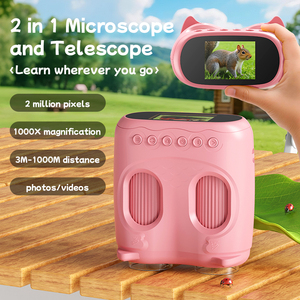
Factory Inskam 387 1000X Kids IPS Display Microscope Kit
- Magnification: 1000X Optical/Digital
- Battery: 600mAh Rechargeable
- OS Support: Windows / Mac OS
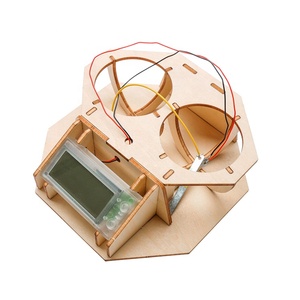
Physics & Chemistry Lesson DIY Lemon-Powered Clock STEM Kit
- Principle: Bio-Electrochemistry
- Components: Copper/Zinc Electrodes
- Usage: Classroom Experiment Module
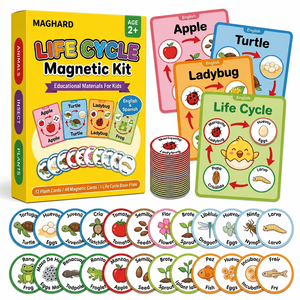
Kids Nature Science Kit With Animal/Plant Life Cycle Magnetic Cards
- Features: Magnetic Demonstration Board
- Media: High-Density Graphic Cards
- Style: Montessori Home Learning
Strategic Sourcing Analysis: Partnering with China Wholesale Science Kits Suppliers
The global educational toy sector has evolved from basic playthings into sophisticated Next Generation Science Standards (NGSS)-aligned learning tools. Navigating the manufacturing ecosystem of a China wholesale science kits supplier requires an in-depth understanding of engineering architecture, material compliance, optical precision, and supply chain auditability. For institutional procurement officers, brand owners, and retail chain buyers, selecting the optimal manufacturing partner dictates not only unit profit margins but also legal defensibility across major regulatory jurisdictions, including North America, the European Union, and the Asia-Pacific region.
Executive Sourcing Insight: Modern B2B buyers must look beyond initial FOB unit costs. Value realization in STEM kit manufacturing depends on modular tooling scalability, non-toxic material safety assurance, low defective rates in micro-electronics, and comprehensive OEM/ODM customization capabilities.
1. Science & STEM Product Categorization Matrix
China's manufacturing clusters in Zhejiang, Guangdong, and Jiangsu have established highly specialized industrial ecosystems. Understanding the underlying engineering of each kit sub-category allows procurement directors to streamline custom molding and circuit design specifications:
| Category Family | Core Components & Electronics | Primary Material Standards | Testing Requirements | Target Age / Market |
|---|---|---|---|---|
| Smart Digital Optics | 2MP/5MP CMOS Sensors, IPS LCD Displays, LED Array, Lithium Batteries | ABS Chassis, Optical Grade PMMA/Glass Lenses | EN71-1/2/3, CE-EMC, RoHS, FCC ID, UN38.3 | Ages 6–14 / EdTech & Retail |
| Chemical & Bio Experiments | Reagent Vials, Pipettes, Test Tubes, Litmus Indicators | Food-Grade PP, Sealed ABS Containers, Non-toxic Salts | REACH SVHC, CPSC Phthalates, EN71-4 / EN71-5 | Ages 8–16 / School Science Supplies |
| Mechanical & Physics DIY | 3V DC Motors, Solar Panels, Gear Trains, Laser-Cut Wooden Assemblies | FSC-Certified Basswood, Copper Wiring, Recycled ABS | ASTM F963 Physical Hazard, Prop 65 Lead | Ages 7–14 / STEM Subscription Boxes |
| Nature & Life Cycle Discovery | Magnetic Cards, Magnifying Lenses, Insect Observation Chambers | BPA-Free Acrylic, Non-toxic Soft Rubber, Coated Paperboard | EN71 Part 1 (Sharp Edges), CPSIA Heavy Metals | Ages 3–8 / Montessori & Early Years |
2. Future Sourcing & Procurement Trends (2025–2030)
The market for wholesale educational toys is undergoing three major shifts driven by buyer intent, educational reforms, and global regulatory changes:
A. Hybrid Digital-Physical Learning Integration: Purely manual DIY kits are increasingly being enhanced with digital observation tools. Products such as digital microscopes with IPS displays and borescope inspection cameras enable students to digitize physical findings. B2B buyers should prioritize suppliers with in-house SMT (Surface-Mount Technology) pick-and-place lines and firmware development capabilities to ensure reliable digital integration.
B. Sustainable & Eco-Conscious Material Substitution: Regulators in the EU and North America are tightening restrictions on single-use plastics and non-recyclable polymers. Tier-1 Chinese suppliers are responding by adopting FSC-certified plywood, sugarcane-derived bioplastics (PLA), and recycled ABS. OEM buyers can gain a competitive advantage by specifying bio-based materials early in the prototyping phase.
C. Modular "Curriculum-in-a-Box" Packaging: Distributors are requesting complete modular systems rather than standalone toys. Kits with structured learning cards, multi-stage experiment manuals, and refillable consumable packs yield higher customer retention and subscription lifetime value (LTV).
Enterprise OEM / ODM Manufacturing Competencies
Our integrated manufacturing infrastructure bridges the gap between creative product design and mass B2B export compliance.
Custom Tooling & Mold Engineering
In-house CNC mold-making allows rapid prototype iteration within 7–14 days. We transform CAD concepts into certified plastic injection and wooden assembly parts with strict tolerances.
Full Compliance & Testing Support
Every batch undergoes testing for EN71 (Parts 1-4), ASTM F963, CPSIA, CE, and RoHS. We coordinate directly with third-party labs like SGS, TÜV, and Intertek for official test reporting.
Scalable Mass Production & Logistics
Supported by 20+ audited manufacturing units, our capacity exceeds 500,000 kit units monthly. We support FOB, CIF, DDP, and Amazon FBA warehouse replenishment options worldwide.
Quality Control Framework & Material Safety Assurance
For B2B buyers sourcing STEM science kits, safety protocol failure represents a catastrophic financial and reputational risk. As a dedicated China wholesale science kits supplier, our quality assurance operational flow includes five distinct inspection gates:
Phase 1: Raw Material Chemical Auditing (IQC)
All plastic granules (ABS, PP, PC), wooden sheets, and chemical reagents are tested upon arrival. We conduct XRF screening for heavy metals (Lead, Cadmium, Mercury, Hexavalent Chromium) and GC-MS testing for phthalate plasticizers before raw materials enter production.
Phase 2: Precision Injection & Component Molding
High-precision injection molds ensure smooth edges and structural integrity, eliminating small parts detachment risks for kits designed for younger age brackets. Mold maintenance logs are tracked digitally to prevent dimensional drift.
Phase 3: SMT Micro-Electronics & Optical Calibration
For digital products like handheld microscopes and borescopes, optical lenses are assembled in cleanroom environments to prevent dust intrusion. CMOS sensor chips undergo automated optical inspection (AOI) to verify color accuracy and pixel integrity.
Phase 4: In-Process Assembly & Functional Testing (IPQC)
Random inline sampling checks gear assembly ratios, battery polarities, screen backlights, and liquid reagent seals. Drop tests are executed from 1.5 meters onto concrete to verify enclosure durability under transit conditions.
Phase 5: Pre-Shipment Outgoing Inspection (OQC)
Final inspections strictly adhere to ISO 2859-1 (AQL Level II, Standard Normal Sampling). We check master carton crush resistance (ECT/Burst test), artwork barcode readability, localized manual accuracy, and kit component counts before sealing container loads.
Frequently Asked Questions for B2B Science Kit Sourcing
Clear, direct answers to common questions from enterprise buyers, educational brand owners, and logistics directors.
What is the standard Minimum Order Quantity (MOQ) for custom OEM orders?
Our standard OEM MOQ for customized packaging and branded graphics starts at 1,000 sets per item. For fully custom plastic mold development or specialized electronic firmware integration, initial MOQs generally range from 2,000 to 3,000 sets depending on unit tooling costs.
How do you handle chemical safety regulations for chemistry experiment kits?
All chemical components (such as baking soda, citric acid, or food-grade colorants) are formulated to strictly conform to EN71-4 / EN71-5 safety limits. They are packaged in child-resistant, tamper-evident vials accompanied by comprehensive Material Safety Data Sheets (MSDS) and Safety Data Sheets (SDS) for global customs clearance.
Can you provide multi-language instruction manuals and packaging?
Yes. Our in-house graphic design and desktop publishing team works directly with localized translation files (English, Spanish, French, German, Italian, Arabic, etc.). We assist in formatting multi-language user manuals, safety warnings, and exterior boxes to meet destination-specific labeling regulations.
What is the typical production lead time from prototype to port departure?
Pre-production sample sign-off typically takes 5–7 working days for existing tooling, or 15–20 days for custom 3D sample iteration. Once samples are approved, full mass production lead time is approximately 25 to 35 calendar days, depending on order volume and electronic component availability.
Are battery-operated digital instruments shipped safely for air freight?
Products equipped with rechargeable lithium batteries (e.g., the Inskam 1000X Digital Microscope) hold valid UN38.3, MSDS, and Air/Sea Transport Safety Certificate reports. We utilize certified protective packaging to meet IATA and IMO lithium battery export guidelines.
How do you protect client Intellectual Property (IP) for custom ODM designs?
We execute legally binding Non-Disclosure Agreements (NDAs) prior to receiving proprietary design files or CAD drawings. We enforce strict internal controls: custom tooling dies are cataloged, segregated, and strictly restricted from open market distribution or secondary buyer production.
Accelerate Your Science Kit Supply Chain
Request detailed pricing catalogs, product specifications, or arrange factory audit documentation with our senior B2B engineering sales consultants today.