Engineered with food-grade eco-PVC, non-toxic silicone, and high-impact ABS resination. Every batch undergoes strict mechanical, flammability, and heavy metal testing.
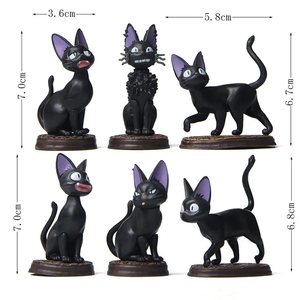
6 PCS/SET Kiki's Delivery Service Animal Cat Jiji Micro Landscape Figures
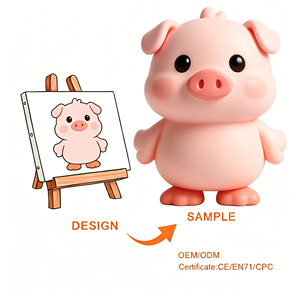
Customized Pink Pig-shaped PVC Action Figure Toy 3D Blind Box Series
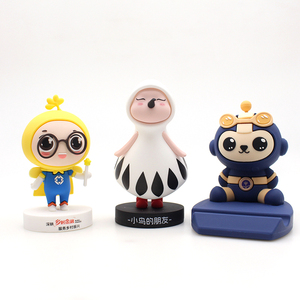
OEM Custom Collectible 3D Printing Eco-Friendly PVC Resin Art Toy
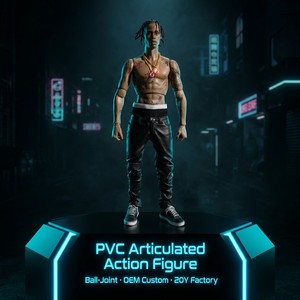
PVC Articulated Anime Action Figure Joint Movable Model Toy OEM/ODM
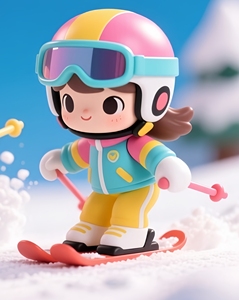
Custom Vinyl Toy Collectible Action Figures Cartoon Style Semi-Finished
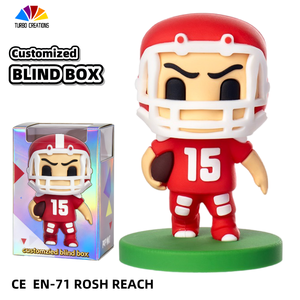
Custom Mini 3D Figurine Couple Model with Mystery Blind Packaging
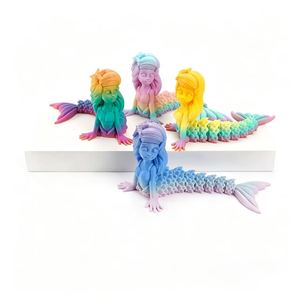
3D Printed Eco-Friendly PLA Mermaid Articulated Action Figure
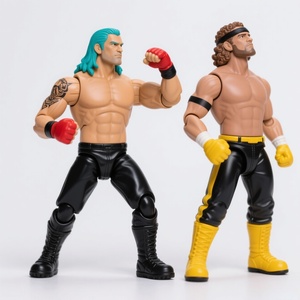
High Quality Sport Wrestling PVC 3D Action Figure Wrestler Characters
Executive Summary: The Strategic Blueprint for Custom OEM Baby Toys Procurement
Navigating the global supply chain for early childhood development products demands an uncompromising focus on polymer safety, mechanical compliance, and rapid tooling adaptability. As international safety standards such as EU EN71, US ASTM F963, and CPSIA Section 108 undergo frequent technical revisions, brand owners and procurement directors can no longer rely on legacy low-cost manufacturing models. Modern supply chain success hinges on partnering with vertically integrated OEM/ODM factories capable of executing rapid CAD-to-mold prototyping, non-toxic material formulation, and automated quality control.
This industry report outlines the essential technical benchmarks, regulatory frameworks, and market evolutions shaping the custom baby toy and collectible figurine manufacturing ecosystem. Operating via optimized export hubs in Vietnam and Southeast Asia, Vietnam Exports Limited (VietnamToy.com) provides global buyers with a de-risked manufacturing platform that balances cost efficiency with Tier-1 compliance architecture.
Vertically Integrated Tooling & Mold Engineering
Our infrastructure encompasses full-cycle CAD/CAM design, CNC steel mold carving, and rapid SLA 3D prototype printing. By maintaining in-house mold shop capabilities, we reduce tooling lead times from the industry average of 45 days down to 18-22 days, ensuring tight dimensional tolerances (±0.02mm) for snap-fit toddler toys and intricate action figure joints.
Rigorous Chemical & Polymer Assurance
Baby toys require strict material purity. We strictly utilize virgin medical-grade polymers, food-grade liquid silicone rubber (LSR), and non-toxic phthalate-free PVC compounds. Every raw resin batch is verified through Gas Chromatography-Mass Spectrometry (GC-MS) to guarantee zero migration of heavy metals (Lead, Cadmium, Barium) or banned plasticizers.
De-Risked Export Logistics & Regional Flexibility
Operating with regional manufacturing nodes across Vietnam, our supply chain mitigates tariff bottlenecks and geopolitical disruptions. Supported by ocean, air, and overland logistics corridors, we provide DDP, FOB, and CIF shipping options to over 50 export destinations with full customs clearing clearance documentation.
| Testing Protocol | Regulatory Body | Technical Target / Benchmark | OEM Quality Control Procedure |
|---|---|---|---|
| EN 71-1: Mechanical & Physical | European Union (CE) | Choke hazard prevention, small parts cylinder test, tension/torque testing (>90N force). | 100% automated visual inspection & mechanical pull testing on articulated joints and small accessories. |
| EN 71-3: Migration of Elements | European Union (REACH) | Screening of 19 toxic heavy metals (Aluminum, Antimony, Arsenic, Barium, Lead, etc.). | Inductively Coupled Plasma Mass Spectrometry (ICP-MS) batch verification prior to mass injection molding. |
| ASTM F963-17 / CPSIA | United States (CPSC) | Total lead content <90ppm in surface coatings; 8 phthalate types restricted <0.1%. | Third-party laboratory testing (SGS/TÜV/Intertek) certificate generation per production lot. |
| Bite & Sharp Edge Test | Global Standards | Simulation of infant bite pressure (25-50 lbs force) without structural shattering or sharp points. | High-impact drop testing (1.5 meters onto concrete covered with vinyl tile) and bite simulator compression. |
1. Nearshoring & Multi-Node Supply Networks
B2B importers are shifting away from single-source reliance. The establishment of high-capacity manufacturing centers in Vietnam provides global brand managers with vital supply chain redundancy. Tariff optimization, shorter maritime transit times to major North American and European ports, and competitive labor cost structures make Southeast Asian toy exports the fastest-growing sector in international trade.
2. Bio-Based Polymers & Circular Economy Mandates
The global regulatory push toward zero-landfill manufacturing has accelerated the adoption of alternative materials. Procurement teams now demand bio-based PolyLactic Acid (PLA), post-consumer recycled (PCR) ABS, and eco-resin blends for both baby toys and designer art figures. Modern factories must maintain clean room injection setups to process eco-polymers without compromising structural durability or color vibrancy.
3. Rapid SLA/SLS Prototyping & Digital Twin Design
The traditional 6-month product development lifecycle is officially obsolete. Using high-resolution SLA/SLS 3D additive printing and digital twin CAD simulation, factories can turn raw sketches into physical master samples within 72 hours. This enables brand owners to perform small-batch market testing (e.g., blind box collectable series) before committing to capital-intensive multi-cavity steel tooling.
4. Smart Sensory & Montessori-Aligned Engineering
Consumer demand for early developmental toys has fueled growth in sensory-focused baby products. Modern OEM procurement prioritizes multi-textured integration—combining soft rotocast vinyl, tactile silicone ridges, soft sound-maker inserts, and high-contrast color palettes. Manufacturing partners must possess cross-material assembly lines to bond disparate substrates securely without toxic adhesives.
To maintain competitive edge, OEM exporters are integrating advanced industrial engineering techniques into standard production lines. Below are the key manufacturing breakthroughs driving quality elevate across baby toys, anime collectibles, and action figures:
Ultrasonic Welding & Adhesive-Free Assembly
Traditional chemical glues pose potential off-gassing and toxicity risks for infant products. Advanced factories utilize ultrasonic molecular bonding for multi-part plastic assemblies, creating seamless, high-strength joints that exceed 120N pull-force standards without hazardous chemical solvents.
Automated Tampo (Pad) & UV Spray Spraying
Achieving crisp facial features on action figures and intricate patterns on baby toys requires high-precision robotic pad printing. Multi-axis CNC spraying systems ensure uniform paint thickness (<15 microns), high scratch resistance, and zero peeling during sterilizing wash cycles.
Precision Rotocasting & Hollow Vinyl Molding
Rotational molding allows the creation of lightweight, squeezable hollow vinyl figures. By controlling oven rotation speeds and cooling cycles, manufacturers eliminate thin-wall vulnerabilities, ensuring uniform tactile feedback perfect for bath toys and sensory infant squeezers.
Concept & CAD Engineering
Client submits 2D sketches or 3D files (STP/OBJ/STL). Our engineering team performs Design for Manufacturability (DFM) analysis to optimize wall thickness, parting lines, and mold draft angles.
Rapid Prototyping & Tooling
SLA 3D master prints are generated for physical approval within 3–5 days. Upon client sign-off, high-durability steel or aluminum injection molds are precision carved on 5-axis CNC machines.
Mass Production & Certification
Pre-production (T1) samples undergo full laboratory testing (EN71/ASTM). Upon approval, mass injection molding, hand finishing, automated packaging, and global export shipping commence.
Q1: What are your minimum order quantities (MOQ) for custom OEM baby toys and action figures?
Our standard MOQ for custom plastic injection molded toys and PVC action figures typically starts at 1,000 to 3,000 units per design, depending on product dimensions and mold complexity. For specialized 3D-printed or eco-resin short runs, we offer flexible low-MOQ pilot programs starting at 500 units to support market testing and boutique brand rollouts.
Q2: How do you guarantee compliance with international baby toy safety standards (EN71, ASTM F963, CPSIA)?
We implement a strict three-tier quality control protocol: 1) Incoming raw polymer verification via GC-MS and ICP-MS testing; 2) In-line automated optical inspection during molding; and 3) Third-party laboratory testing (SGS, TÜV, or Intertek) on finished pre-production samples. Formal Certificates of Conformity (CPC/COC) are issued for every export shipment.
Q3: What is the typical lead time for mold engineering and sample approval?
Rapid 3D prototype samples are completed within 3 to 5 business days. Full steel injection mold tooling requires 18 to 25 calendar days depending on cavity count (single vs. multi-cavity). T1 pre-production samples are dispatched immediately following mold trial completion.
Q4: How are intellectual property (IP) rights and custom designs protected?
Intellectual property protection is paramount. We sign non-disclosure agreements (NDAs) prior to receiving any design files. All CAD models, mold tooling, and proprietary color recipes remain the exclusive property of the client. Tooling is securely stored in our climate-controlled vault and is never utilized for third-party manufacturing.
Q5: Can you accommodate eco-friendly, biodegradable, or recycled plastic materials?
Yes. We specialize in processing green polymers including 100% bio-based PLA, GRS-certified post-consumer recycled (PCR) ABS, and non-toxic plant-derived TPEs. Our material engineering team formulates custom compounds that match the mechanical tensile strength and drop resistance of traditional virgin plastics.
Q6: What custom packaging options do you provide for retail and blind box series?
We offer complete end-to-end packaging manufacturing, including custom printed blind boxes with foil pouch sealing, blister cards, window display boxes with PET inserts, and eco-friendly FSC-certified corrugated boxes. Barcode printing, anti-counterfeit holographic labels, and retail-ready display PDQs are fully integrated.
Q7: What are the primary export logistics channels offered for North American and European buyers?
We support FOB (Free on Board), CIF (Cost, Insurance, and Freight), and DDP (Delivered Duty Paid) trade terms. Export shipments route through major deep-water ports (such as Haiphong and Cat Lai in Vietnam), offering direct maritime transit to West Coast USA (14-18 days) and Main European Hubs (24-30 days), as well as expedited air freight services.
Q8: How do I initiate a formal request for quotation (RFQ) for my product line?
To receive a comprehensive cost breakdown within 24 hours, click the contact button below to submit your 2D/3D design files, target dimensions, material preferences, and estimated annual order volumes to our engineering sales team.
Partner with a Premier OEM Baby Toys Manufacturer
Streamline your product development pipeline, ensure absolute safety compliance, and access factory-direct pricing from certified production facilities.