Executive Summary: Navigating Global Custom Plush Sourcing
The international stuffed toy market has reached a pivotal transformation phase. Driven by escalating consumer demand for retail-grade IP collectibles, hypoallergenic infant products, and sustainable materials, global brands and B2B buyers must navigate complex supply chain dynamics. Selecting the right partner from the global field of custom plush manufacturers and factories requires a deep understanding of technical production parameters, compliance standards, material engineering, and quality management protocols.
As a leading manufacturing group operated by Vietnam Exports Limited, our enterprise facility integrates multi-modal supply chain efficiencies, skilled artisan craftsmanship, and automated stitch engineering. Operating from modern manufacturing hubs in Vietnam, we provide global brand owners, IP licensors, retail chains, and Amazon sellers with comprehensive OEM, ODM, and OBM end-to-end solutions. By combining rigorous AQL 1.5/4.0 inspection standards with low MOQ flexibility and rapid prototyping, we bridge the gap between creative design concepts and mass-market retail compliance.
Full Turnkey OEM / ODM / OBM
Complete product development from initial 2D vector concepts, 3D digital pattern creation, fabric selection, and prototype turnarounds to mass manufacturing and customized eco-friendly retail packaging.
Rigorous Safety Certification
Every plush unit is engineered to strictly meet EN71 (Parts 1, 2, 3), ASTM F963-17, CPSIA, CE Marking, REACH, and ISO 8124 standards, ensuring absolute safety for infants and children.
Precision Embroidery & Stitching
Utilizing high-speed Tajima multi-head embroidery machines and computerized laser cutting systems, achieving ultra-precise facial detail, 3.5 stitches per cm seam density, and superior pull-strength endurance.
Strategic Vietnam Supply Chain Hub
Benefit from optimized export tariffs, major deep-water port access, and stable labor dynamics. We offer global buyers a robust alternative supply chain strategy mitigating geopolitical trade friction.
Sustainable & Eco-Friendly Fibers
Pioneering green manufacturing with OEKO-TEX Standard 100 certified organic cotton outer plush, hypoallergenic 100% recycled rPET polyester fiberfill, and water-based non-toxic dyes.
Low MOQ & Scalable Mass Production
Flexible procurement models catering to emerging boutique brands with low initial order minimums while maintaining capacity for multi-million unit mass production orders for worldwide retail drop-shipping.
The 2025 Global Top 10 Custom Plush Manufacturer Evaluation Matrix
To assist global procurement directors, quality assurance managers, and product developers in vetting OEM suppliers, our engineering team has established a comprehensive benchmarking framework. Evaluating a custom plush factory goes far beyond simple unit cost pricing—it mandates a thorough audit of raw material integrity, mechanical safety compliance, factory audit certifications, and production lead times.
| Audit Evaluation Metric | Industry Standard Factory | Tier-1 OEM Leader (Our Standard) | B2B Sourcing Risk Level |
|---|---|---|---|
| Fabric & Fiber Quality | Standard carded PP Cotton / Polyester | 7D/15D Three-Dimensional Conjugated Siliconized Fiber | High (Lumping & seam strain) |
| Seam Tensile Strength | 50N - 60N Force Resistance | > 70N Continuous Force Pull-Test (EN71-1 Compliant) | Critical (Choking hazard risk) |
| Eye & Attachment Fixing | Basic Washers / Heat-sealed plastic | Dual-Locking Backer Washers + 90N Mechanical Pull Test | Severe (Regulatory recall hazard) |
| Foreign Metal Detection | Single-pass manual metal sweep | Dual-Channel Automated High-Sensitivity Needle Detectors | Catastrophic (Consumer safety breach) |
| Factory Compliance Audits | Basic Local Business License | ISO 9001:2015, BSCI, SMETA 4-Pillar, Disney FAMA | High (Retail supplier rejection) |
| Fabric Eco-Certification | Standard Synthetic Dyes | OEKO-TEX Standard 100 Class 1 (Baby Safe), GRS Certified | Medium (Greenwashing backlash) |
Future Procurement Trends in Custom Plush Manufacturing
As consumer preferences evolve and supply chain vulnerabilities persist, strategic buyers are altering their purchasing strategies. Understanding these macroeconomic trends is vital for brands aiming to maintain gross margin stability and brand reputation over the next decade.
1. Supply Chain Diversification Beyond Traditional Hubs
Global brand managers are actively pursuing a "China+1" or multi-hub procurement model. Manufacturing centers in Southeast Asia, particularly Vietnam, have emerged as premier destinations for high-volume stuffed animal production. With competitive labor efficiency, expanding seaport infrastructure, and favorable international trade tariffs (such as EVFTA and CPTPP), sourcing plush products from Vietnam offers crucial resilience against supply chain bottlenecks.
2. Sustainable Materials & The Circular Economy
Environmental governance is no longer optional for major retailers in North America and Europe. The shift toward Global Recycled Standard (GRS) certified materials is accelerating. Future plush manufacturing relies on converting post-consumer recycled plastic bottles into ultra-soft rPET plush fabric and eco-fillings. Suppliers capable of providing verified GRS transaction certificates (TC) across the supply chain hold a decisive competitive advantage.
3. Hyper-Customization & Anime/Gaming IP Merchandising
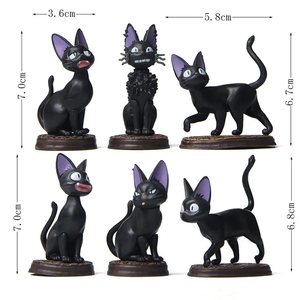
The explosive growth of creator economies, gaming franchises, and pop-culture fandoms has driven demand for highly complex, small-batch plush figures (such as 10cm–20cm cotton dolls, anime plushies, and detailed mascot replicas). Modern factories must adapt to complex 3D pattern layouts, multi-layered costume embroidery, detailed hair shaping, and specialized face printing techniques while accommodating lower minimum order quantities.
4. Digital Prototyping & 3D Pattern Simulation
Traditional plush prototyping involved multiple rounds of manual sculpting, fabric cutting, and physical sample revisions—often requiring 4 to 6 weeks. Leading custom plush factories are integrating 3D CAD pattern software to simulate fabric drape, stretch coefficient, and stuffing volume virtually. This reduces prototyping turnarounds to as short as 3–5 days, dramatically shortening time-to-market for seasonal product launches.
Industry Evolution: Technical Paradigms in Plush Production
Manufacturing a premium plush toy requires a sophisticated blend of textile engineering, mechanical safety design, and precision craftsmanship. The modern factory floor looks vastly different from facilities of two decades ago, driven by state-of-the-art machinery and rigorous quality control protocols.
Computerized Pattern Layout & Precision Laser Cutting
Traditional die-cutting tools are rapidly being replaced by multi-layer automated CNC laser cutting systems. These laser cutters seal the edges of short-pile and long-pile fabrics simultaneously, eliminating fiber shedding along seam boundaries. Computerized pattern layout software maximizes fabric yield, reducing material waste by up to 18% and ensuring that complex panel shapes match original digital vector specifications exactly.
Advanced Stuffing Technology & Density Management
The tactile feel, shape retention, and weight distribution of a custom plush toy depend heavily on stuffing techniques. Modern manufacturing utilizes pneumatic carding machines that fluff raw polyester staple fibers into 3D conjugated spiral clusters before injecting them into the sewn shell using calibrated air pressure. This ensures even density throughout arms, legs, and body cavities, preventing hollow spots or premature sagging after transit.
Integrated Electronic & Interactive Plush Engineering
Plush toys are increasingly incorporating interactive electronics, such as Bluetooth sound modules, capacitive touch sensors, recording devices, LED illumination, and weighted sensory inserts. Factories must maintain dedicated ESD-safe (electrostatic discharge) assembly zones, specialized wire routing pathways within plush hulls, and robust battery enclosure locking mechanisms to guarantee child safety and compliance with international EMC standards.
What is the typical lead time for custom plush sampling and mass production?
For standard OEM designs, digital 3D pattern approval takes 2–3 days. Physical counter-sample creation requires 5–7 working days after fabric sourcing. Upon sample sign-off and deposit confirmation, standard mass production lead time is 25 to 35 days, depending on total order volume and complexity of embroidery or custom outfit accessories.
What minimum order quantities (MOQ) do your manufacturing facilities require?
While traditional factories often demand 3,000+ units per style, our flexible manufacturing model supports low-MOQ trial orders starting at 100 to 500 units for specialized character designs, cotton dolls, or promotional mascot projects. High-volume custom orders (10,000+ units) unlock maximum economies of scale and custom fabric dye-lot customization.
How do you ensure plush toys pass EN71 and ASTM F963 safety testing?
Safety is integrated into our manufacturing process at every stage. We exclusively source fabrics and accessories certified free of heavy metals, lead, phthalates, and azo dyes. During assembly, safety eyes undergo a 90N pull test, seam stitching density is monitored, and 100% of finished goods undergo two-pass metal detection to eliminate needle contamination risk before packaging.
Can you produce custom plush toys from 2D character artwork or rough sketches?
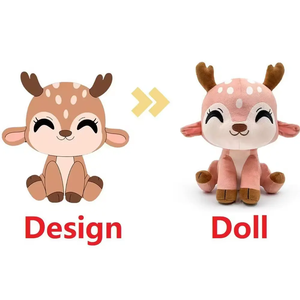
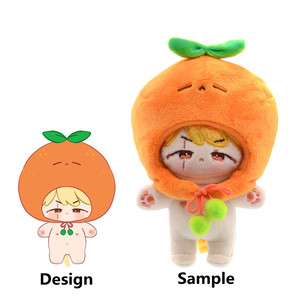
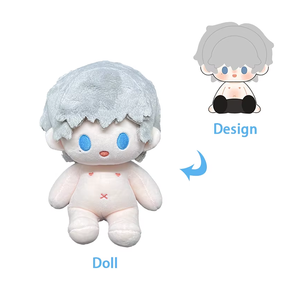
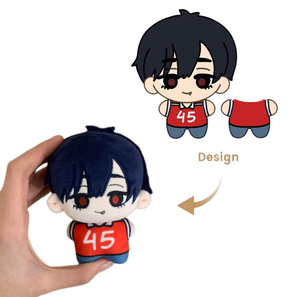
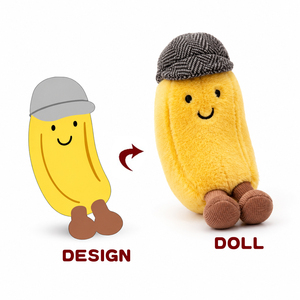
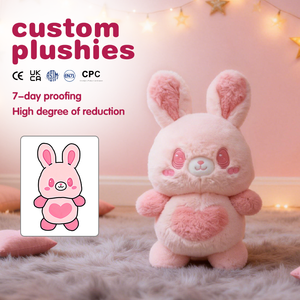
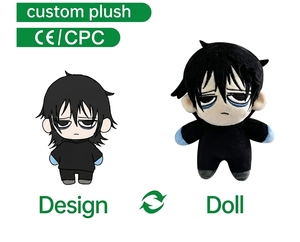
Yes. Our in-house R&D design team specializes in converting flat 2D character illustrations, anime concept art, digital vector files, or photos into fully realized 3D physical plush dolls. We provide detailed fabric swatch cards and digital preview photos during the sampling phase to ensure complete alignment with your vision.
What custom packaging options do you provide for retail distribution?
We provide complete custom packaging solutions, including printed hangtags with UPC/EAN barcodes, woven brand labels, custom printed polybags, window gift boxes, display cartons, and eco-friendly biodegradable packaging. All packaging materials can be fully customized with legal warnings, age grading labels, and tracking information required for US and EU compliance.
How are Intellectual Property (IP) rights protected during the manufacturing process?
We enforce strict IP confidentiality protocols. Before project files or artwork are transferred, we execute binding Non-Disclosure Agreements (NDAs). All artwork, mold designs, pattern files, and production samples remain the exclusive intellectual property of the client, and we never showcase proprietary OEM products without explicit written consent.
Partner With a Trusted Global Custom Plush Manufacturer
Whether you are scaling a worldwide retail plush line, manufacturing licensed IP merchandise, or developing a custom mascot for corporate promotion, our Vietnam manufacturing team delivers enterprise-grade precision, certified safety, and direct factory pricing.