

Strategic Sourcing & Manufacturing Benchmark: Smart Mechatronic & Robot Toys (2025–2030)
Comprehensive guide for global brand managers, procurement directors, and toy importers navigating market shifts, tariff optimization, and technical qualification.
1. Executive Summary & Market Sourcing Vectors
The global intelligent and robot toy market is experiencing a profound paradigm shift. Driven by early childhood STEM (Science, Technology, Engineering, and Mathematics) education policies, AI micro-controllers, and smart interactive entertainment, global demand for robot toys is projected to exceed USD $38.5 Billion by 2030, expanding at a Compound Annual Growth Rate (CAGR) of over 14.2%. Concurrently, international procurement teams face dual pressures: navigating evolving international safety compliance frameworks (such as EU REACH Annex XVII, EN71-3 chemical migration limits, and US CPSIA lead/phthalate constraints) while simultaneously optimizing tariff structures and mitigating regional supply chain concentration risks.
As enterprise buyers shift toward the "China + 1" strategic sourcing framework, manufacturing hubs in Vietnam and broader Southeast Asia have emerged as primary destinations for high-precision plastic injection, mechatronic micro-servo integration, and soft toy assembly. Vietnam Exports Limited (operating via VietnamToy.com) sits at the forefront of this industrial transition, providing global buyers with vertically integrated OEM/ODM manufacturing capability, dual-country tooling logistics, and direct export readiness to over 50 destination countries.
2. Benchmark Methodology: Top 10 Robot Toys Manufacturers & Exporters Evaluation Criteria
Selecting an institutional-grade manufacturing partner for complex mechatronic and plastic robot toys requires rigorous auditing beyond basic piece-rate pricing. When evaluating the market leaders across major manufacturing clusters, enterprise procurement teams apply six core operational metrics:
- Tooling Precision & Design for Manufacturability (DFM): Ability to execute multi-cavity high-durability steel molds with tolerances under ±0.01mm, minimizing flash lines and joint friction on articulated action figures.
- Mechatronic & SMT Integration Capabilities: Cleanroom assembly lines equipped for Surface Mount Technology (SMT), micro-motor calibration, acoustic/optical sensor integration, and stable firmware flashing.
- Eco-Friendly & Non-Toxic Material Sourcing: Direct traceability for medical-grade or high-impact ABS, virgin PVC, eco-friendly PLA bioplastics, and non-toxic water-based spray paints free from cadmium, lead, and volatile organic compounds (VOCs).
- Comprehensive Testing & Certification Audit Trail: In-house testing labs capable of performing torque/tension tests, drop impact tests, battery safety validation, and chemical leaching analysis certified under ISO 9001 and ICTI Ethical Toy Program standards.
- Supply Chain Transparency & IP Protection: Enforceable Non-Disclosure Agreements (NDAs), secure CAD data management, transparent Bill of Materials (BOM) cost structures, and traceable raw material origin documentation.
- Logistics Agility & Customs Compliance: Direct port proximity, automated export documentation handling (FOB, CIF, DDP), and tariff-optimized Certificates of Origin (Form A/EUR.1/CPTPP).
3. Global Manufacturing Hub Comparative Landscape
To assist procurement directors in strategic supply chain mapping, the table below synthesizes key operational metrics across major global manufacturing regions for robot and action figure toys:
| Evaluation Vector | Vietnam (VietnamToy.com Hub) | Traditional East Asia Hubs | South Asia Manufacturing Hubs | Eastern Europe Regional Suppliers |
|---|---|---|---|---|
| Labor & Manufacturing Cost Index | Highly Competitive (-25% vs East Asia) | Moderate to High (Rising Overhead) | Low Base Cost | High Overhead Costs |
| Tariff Structure (US / EU Imports) | Favorable / CPTPP / EVFTA Benefits | Subject to Special Section 301 Tariffs | Variable GSP Status | Duty-Free within EU Zone |
| Custom Tooling & Prototyping Lead Time | Fast (10–18 Days via SLA/CNC) | Fast (7–14 Days) | Moderate (20–35 Days) | Moderate (15–25 Days) |
| EN71 / ASTM F963 Lab Compliance Rate | 99.8% First-Pass Yield | 98.5% First-Pass Yield | 92.0% First-Pass Yield | 99.5% First-Pass Yield |
| Min. Order Quantity (MOQ) Flexibility | High (Boutique & Mass Scale) | Rigid High MOQs | Moderate MOQs | Low to Moderate MOQs |
4. Technical Deep-Dive: Manufacturing Workflow for Articulated & Smart Robot Toys
The manufacturing execution process for modern robotic and articulated figure toys involves sophisticated multi-disciplinary engineering. Below is the standard protocol executed in our manufacturing facilities:
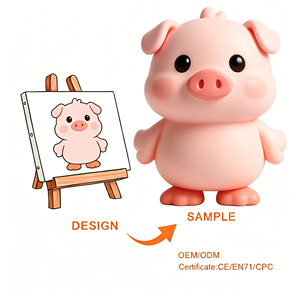
Phase 1: DFM & 3D Prototyping
Conversion of 2D character concept art or CAD models into 3D printable files. SLA digital wax printing is utilized to verify joint articulation tolerances, wall thickness consistency (preventing sink marks), and internal housing spaces for micro-servos or battery boxes.
Phase 2: Precision Tooling & Mold Cavitation
High-grade NAK80 or P20 steel is CNC-milled to create injection mold cavities. Beryllium copper inserts are incorporated into high-heat zones to ensure uniform cooling, preventing warpage on rigid PVC or ABS robotic skeletal structures.
Phase 3: Automated Injection & Rotocasting
Virgin non-toxic PVC or ABS resin is melted under precise temperature curves and injected under high pressure. For hollow heads or specialized collectible bodies, automated vinyl rotocasting ensures balanced wall thickness and structural integrity.
Phase 4: Dust-Free Painting & Tampography
Executed in Class 100,000 cleanroom spray shops. Automated pad printing (tampography) applies ultra-fine facial details and robotic graphics using lead-free, EN71-compliant acrylic inks with high rub-resistance and adhesion factors.
Phase 5: Mechatronic SMT & Sub-Assembly
For robotic toys featuring optical sensors, bluetooth connectivity, or motor-driven articulation, PCB boards are surface-mounted, flashed with proprietary firmware, wired with low-voltage micro-servos, and drop-tested prior to final casing closure.
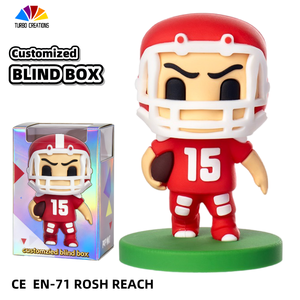
Phase 6: Quality Control & Blind Packaging
100% of finished units undergo torque, sharp edge, small parts bite-gauge testing, and functional cycling. Products are then foil-sealed, heat-shrink wrapped, or boxed in mystery blind-box packaging with serialized barcodes for retail distribution.
5. Emerging Procurement Trends & Sourcing Innovations (2025–2030)
As global retail dynamics shift toward eco-conscious consumers and digitized supply chains, enterprise buyers must align with manufacturers capable of adopting next-generation production processes:
A. Sustainable & Bio-Based Resins: Traditional petroleum-based PVC is increasingly supplemented or replaced by recyclable thermoplastic elastomers (TPE), recycled ABS (rABS), and industrial-grade Polylactic Acid (PLA) derived from sugarcane or cornstarch. Forward-thinking exporters offer full material certification tracing carbon footprint reductions across the manufacturing lifecycle.
B. Smart Toys and Cybersecurity Compliance: Next-generation interactive robot toys integrating voice recognition or app-based Bluetooth control must comply with stringent data privacy legislation, such as the US Children's Online Privacy Protection Act (COPPA) and EU GDPR requirements for internet-connected children's devices. Top exporters now offer pre-certified, secure BLE micro-chipsets integrated directly onto the PCB.
C. On-Demand On-Shoring & Rapid Pre-Sale Batching: To minimize inventory holding costs and deadstock risks, buyers are leveraging high-speed 3D printing and quick-change modular mold inserts. This allows brands to run short pre-sale batches of 1,000 to 3,000 units for blind-box collectibles or crowdfunding campaigns before committing to mass multi-cavity steel tooling runs.
6. Risk Mitigation Checklist for International Toy Buyers
When executing supply contracts with offshore manufacturers, procurement managers should enforce the following contractual safeguard clauses:
- Batch-Level Chemical Testing Mandate: Contractually require third-party laboratory test reports (SGS, TÜV Rheinland, or Intertek) for heavy metals, phthalates, and bisphenol A (BPA) for *every single production lot* before bill-of-lading release.
- Tooling Ownership & Safe Custody Agreements: Explicitly establish that all CAD files, silicone master models, CNC steel molds, and copper electrodes remain the exclusive intellectual property of the buyer, with guaranteed mold maintenance cycles (e.g., minimum 500,000 injection shots).
- AQL 1.0/2.5 Quality Acceptance Standards: Enforce ISO 2859-1 Acceptable Quality Limit (AQL) standards—typically Level II Normal Inspection with AQL 0 for Critical Defects (e.g., sharp edges/choking hazards), AQL 1.0 for Major Defects (functional motor failure), and AQL 2.5 for Minor Defects (minor paint overspray).
Looking to Prototype or Mass-Produce Custom Robot Toys?
Partner with Vietnam's leading OEM/ODM toy manufacturing export center. Rapid prototyping, low MOQs, and certified EN71/ASTM global delivery.
Inquire Now