Dollhouse Furniture Manufacturer & Supplier for the Japan Market
OEM/ODM B2B Whitepaper & Precision Sourcing Guide for Japanese Retailers & Brands
±0.05mm
CNC & Injection Precision
100%
ST Mark & JFSL Compliance
1:12 / 1:6
Standard Japanese Scale Expertise
10+ Years
Global B2B Manufacturing Mastery
Featured Miniature & Dollhouse Products for Japan Wholesale
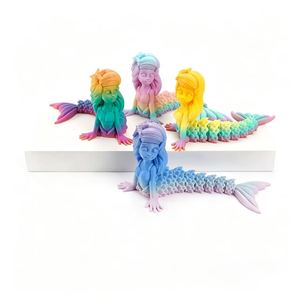
Our engineered catalog combines high-precision plastic injection, eco-friendly 3D resin printing, non-toxic wood finishing, and micro-articulation—specifically calibrated to meet the rigorous quality standards of Japanese buyers and collectors.
Executive Overview: Sourcing Dollhouse Furniture for the Japanese Market
The Japanese market for dollhouse furniture and miniature home decor represents one of the world's most sophisticated, high-expectation B2B retail landscapes. Unlike Western consumer segments where miniature furniture is predominantly categorized under traditional children's toys, Japan's market is heavily driven by adult collectors, subculture enthusiasts (Otaku/Oshi-katsu culture), architectural modelers, and interior design prototypers.
To succeed in Japan, global brand owners, importers, and toy distributors must navigate stringent regulatory frameworks—such as the Japan Toy Safety Standard (ST Mark) and the Food Sanitation Act (食品衛生法) for micro-items—while meeting zero-defect optical finish requirements. As a premier international B2B manufacturer operating out of strategic Asian production nodes including Vietnam, our enterprise bridges state-of-the-art automated manufacturing with artisan finishing to deliver export-ready dollhouse furniture engineered specifically for Japanese distribution channels.
Information Gain Key Takeaway: Sourcing dollhouse furniture for Japan requires strict adherence to scale fidelity (1:12 vs 1:6), Japanese-standard wooden joinery simulation, eco-conscious material provenance (FSC-certified timber, ABS resin without phthalates), and blind-box ("Gachapon") retail packaging specifications.
Critical Micro-Scale Standard Comparison in Japan
Scale Metric
Primary Japanese Target Demographic
Dominant Material Composition
Typical Retail Channel
1:12 Scale (Traditional)
High-end hobbyists, traditional dollhouse collectors, architectural displays
Convenience stores (Conbini), Gacha arcades, Bookstores, Gift shops
Localized Japanese Market Trends Driving Bulk Procurement
Understanding user intent and consumer behavioral shifts within Tokyo, Osaka, and regional Japanese prefectures is essential for maximizing ROI in retail inventory selection. Our market research highlights four key localized trends shaping miniature furniture demand in 2024–2026:
1. "Oshi-katsu" Display Ecosystems
Japanese fans actively purchase 1:12 and 1:6 scale furniture (miniature sofas, vanity tables, gaming desks) specifically to create personalized aesthetic display shrines for their favorite anime idols and character figures.
2. Washitsu (Modern-Traditional Fusion)
High demand persists for miniature traditional Japanese interior elements—Tatami mats, Shoji sliding doors, Chabudai (low wooden tables), and Kotatsu (heated tables)—engineered with flawless wood grain replication.
3. Modular Eco-PLA & Resin DIY Kits
Japanese hobbyists favor eco-conscious, zero-glue snap-fit miniature kits. Sustainable PLA 3D printing and precise laser-cut plywood furniture components cater directly to modern green consumer preferences.
Localized Application Scenarios across Japanese B2B Sectors
As a specialized OEM/ODM supplier, we engineer products for diverse application scenarios across the Japanese retail and commercial environment:
Capsule Toy (Gachapon) & Blind Box Retail
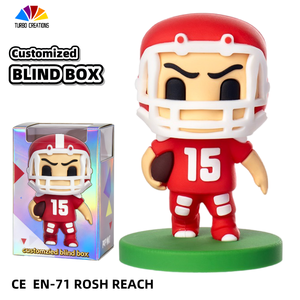
We manufacture high-volume, lightweight ABS/PVC miniature furniture units packaged in standard 65mm–75mm spherical capsule sizes or custom window boxes, fully tailored for automated Japanese vending machines.
Architectural & Real Estate Prototyping
Japanese housing developers and interior designers utilize our ultra-precise 1:20 and 1:50 scale furniture sets to assemble realistic spatial mockups for client presentations in tight urban residential quarters.
Photography Props & Social Media Content
Doll collectors on Instagram and X (formerly Twitter) in Japan demand hyper-realistic micro-textures—fabric weaves on miniature armchairs, operable drawers, and realistic LED-embedded lighting fixtures.
Why Japanese Importers Partner with Our Manufacturing Hub
Synthesizing over a decade of international OEM/ODM toy experience, our integrated manufacturing infrastructure—headquartered with specialized export hubs in Vietnam and regional Asian supply chains—delivers distinct strategic advantages for Japanese commercial procurement:
ST Mark & JFSL Certified Quality
Our facilities implement strict quality management compliant with ISO 9001. All materials undergo heavy metal testing, lead-free surface lacquer verification, and EN71/ASTM/Japan Food Sanitation Law compliance.
Advanced Tooling & Rapid Sampling
Equipped with 5-axis CNC wood machining, high-precision steel mold injection, and industrial SLA/DLP 3D printers, we convert Japanese design schematics into physical prototypes in as little as 5 to 7 working days.
Strategic Tariff & Supply Chain Benefits
Leveraging Vietnam’s extensive free-trade networks (including CPTPP and AJCEP agreements with Japan), our clients enjoy preferential import duty rates, reduced supply chain disruption risks, and optimized ocean/air freight schedules to Tokyo and Yokohama ports.
OEM/ODM Manufacturing Architecture for Japanese Orders
Phase
Technical Operation
Quality Assurance Checkpoint point
Lead Time
1. DFM Review
Design for Manufacturability audit, wall thickness check, shrinkage calculation
Scale ratio & joint tolerance approval
1 - 3 Days
2. Rapid Prototyping
High-resolution DLP 3D resin printing or CNC wood carving
100% Visual inspection, drop testing, chemical testing
15 - 25 Days
5. Export Packaging
Custom Japanese text barcoding (JAN code), moisture barrier wrapping
Palletization & Japan Customs compliance check
3 - 5 Days
Frequently Asked Questions (FAQ) for Japanese B2B Sourcing
Here are direct, technical answers to common questions raised by Japanese procurement officers, retail category managers, and private-label buyers.
Q1: How do your dollhouse furniture products comply with Japanese ST (Safety Toy) Mark standards?
Answer: Our manufacturing processes strictly adhere to the ST Safety Standards set by The Japan Toy Association (JTA). Specifically, for Part 1 (Physical and Mechanical Properties), we ensure all miniature furniture pieces have smooth edges, rounded corners, and structural integrity to prevent small-part detachment risks. For Part 3 (Chemical Properties), we exclusively utilize non-toxic, lead-free, heavy-metal-tested paints and resins. Full lab test reports from accredited third-party labs (such as SGS or TUV) are provided prior to shipping.
Q2: Do you support low Minimum Order Quantities (MOQs) for specialized Japanese boutique brands?
Answer: Yes. While standard mass-production plastic injection runs generally start at 1,000 to 3,000 units per mold set, we offer flexible MOQ structures for premium wooden dollhouse furniture and high-end 3D resin items—starting as low as 300 to 500 sets. This allows Japanese brands to test niche market designs without taking on excessive inventory risk.
Q3: What are the primary customs tariff implications when importing toy furniture from your facilities to Japan?
Answer: By shipping from our certified production facilities in Vietnam under the AJCEP (ASEAN-Japan Comprehensive Economic Partnership) or CPTPP treaties, Japanese importers can apply for Certificate of Origin (Form AJ / CPTPP). This frequently reduces the conventional tariff rate on plastic and wooden toy furniture (HS Code 9503.00) down to 0%, providing a key cost advantage over other manufacturing destinations.
Q4: Can you handle Japanese-language packaging, JAN barcodes, and custom retail display boxes?
Answer: Absolutely. Our in-house packaging department is experienced in print prepress for Japanese typography, JAN (Japanese Article Number) / EAN barcoding, warning label placement compliant with Japanese consumer protection laws, and specialty packaging formats including blind boxes, header-card polybags, and collector window boxes with PET blisters.
Q5: How do you guarantee scale precision across large-volume production runs?
Answer: We employ high-precision steel tooling with tolerances held strictly within ±0.05mm. For wooden furniture sets, we use computerized high-precision CNC routers and climate-controlled drying rooms to prevent timber warping in Japan's seasonal humidity changes. Every batch undergoes CMM (Coordinate Measuring Machine) inspection prior to final packaging.
Ready to Scale Your Miniature Furniture Line for Japan?
Partner with a trusted, ST-compliant manufacturer. Connect directly with our engineering team to receive instant technical quotes, request product samples, or schedule an OEM/ODM project consultation.